
Every four years, the world watches the FIFA World Cup. Few viewers realize the match ball in play was likely hand-stitched in a modest Pakistani city called Sialkot.
If you’re a brand owner, procurement manager, or entrepreneur researching sports manufacturing hubs, you’ve probably faced the same dilemma: China feels oversaturated, Vietnam is getting expensive, and quality control in emerging markets is unpredictable. You need a manufacturing partner that balances craftsmanship, scale, and cost, without the red tape.
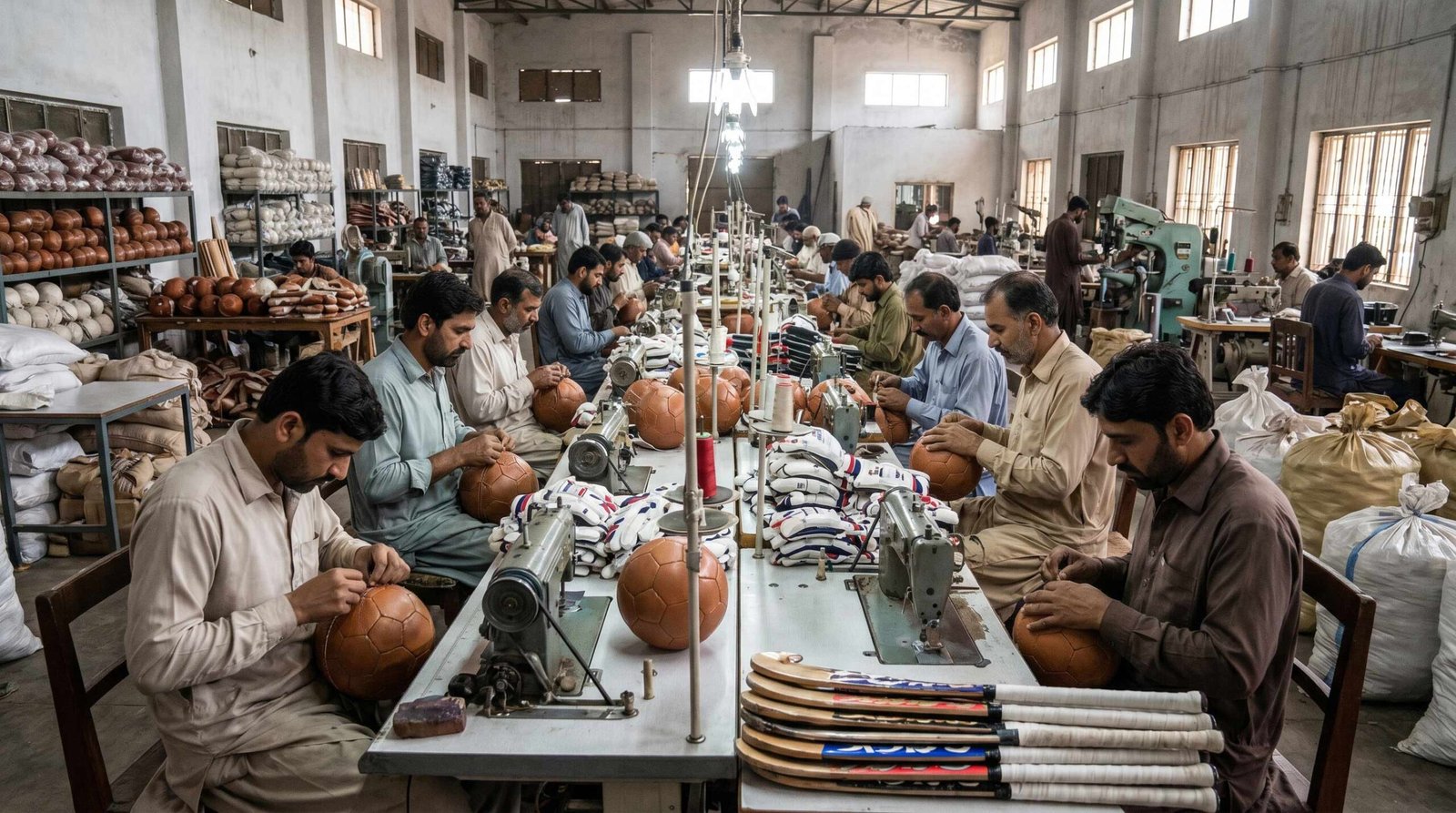
Sialkot isn’t just another low-cost option. It’s a century-old industrial ecosystem that produces roughly 60–70% of the world’s hand-stitched inflatable footballs, supplies major brands like Adidas and Nike, and is now exporting over $1 billion annually in sports goods.
In this guide, we’ll break down exactly why this city became the global capital of sports manufacturing, how its fitness clothing manufacturer sector is evolving, and what you need to know before sourcing from here.
What Makes Sialkot the Undisputed Capital of Sports Manufacturing?
A 100-Year Legacy You Can’t Replicate Overnight
Sialkot’s sports manufacturing story began over a century ago when local artisans started repairing sporting equipment for British colonial officers. That apprentice-to-master knowledge transfer didn’t disappear, it compounded. Today, you won’t find this depth of specialized hand-stitching skill anywhere else on Earth.
As one industry analysis noted, this “culture of craft, training, and pride that has been passed down in workshops over decades” is impossible to replicate in other countries overnight.
When you source from Sialkot, you’re not just buying labor; you’re buying generational expertise.
The Cluster Effect: Why Geography Is Sialkot’s Secret Weapon
Sialkot operates on a dense cluster model. Suppliers of leather, synthetic materials, bladders, and thread sit within kilometers of stitching houses, finishers, and exporters. This isn’t theoretical, it’s why a factory can correct a material defect in hours rather than weeks.
The Sialkot Chamber of Commerce reports that over 8,000 SMEs operate in the region, contributing over $2.5 billion in annual exports across sports goods, surgical instruments, and leatherwear. This concentration means:
- Shorter lead times for prototypes
- Lower logistics costs within the supply chain
- Faster problem-solving when issues arise
FIFA-Certified Quality, Not Just “Good Enough”
Sialkot doesn’t just produce quantity, it produces tournament-grade quality. The city manufactured the official “Al Rihla” match ball for the 2022 FIFA World Cup, continuing a legacy that includes balls for the 1982, 2002, 2014, and 2018 tournaments.
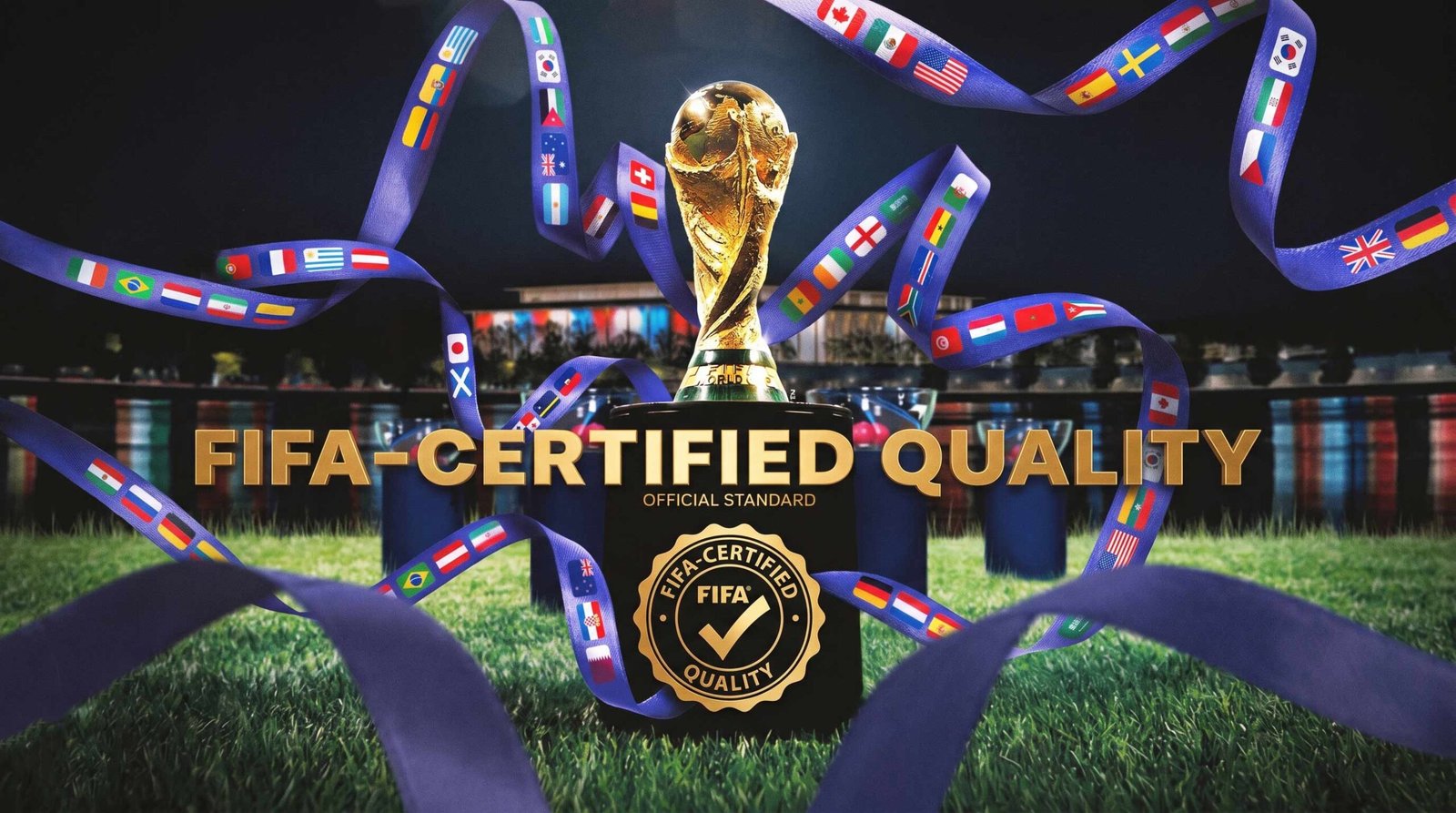
The Sports Industries Development Centre (SIDC), an ISO 9001:2015 certified facility, has produced over 12.2 million sports balls and components, contributing nearly $81 million to national exports while training over 650 workers directly. When a Sialkot factory says “FIFA inspected,” they mean it.
By the Numbers: Sialkot’s Export Dominance
The data tells a clear story. According to the Pakistan Bureau of Statistics:
| Metric | Data Point |
| Sports goods exports (July–Oct 2025) | $147.68M (↑17.74% YoY) |
| Football exports growth (FY 2025-26) | ↑23.64% to $113.64M |
| Global hand-stitched football share | ~70% (40M units/year) |
| Sialkot’s share of Pakistan sports exports | Dominant majority |
| Annual export target (2025) | $1.10 billion |
Football exports alone surged 44.70% in July 2025 compared to the previous year, reaching $25.72 million in a single month. This isn’t a spike, it’s a sustained trajectory.
Beyond Football: The Rise of Sialkot as a Fitness Clothing Manufacturer Hub
From Leather Balls to Performance Wear
While Sialkot built its name on footballs and hockey sticks (Awan Sports reportedly produces 90% of professional hockey sticks globally), the city’s fitness clothing manufacturer sector is now its fastest-evolving segment. Modern Sialkot factories produce:
- Compression leggings and base layers
- Moisture-wicking performance tops
- Custom gym wear with sublimation printing
- Private-label activewear with MOQs as low as 50 pieces
Why Fitness Brands Are Moving Apparel Orders to Sialkot
Expert insight from factory floors: Sialkot’s apparel manufacturers aren’t starting from zero. They’re applying the same rigorous quality discipline from ball manufacturing to fabric construction. That means:
- Flatlock stitching that survives CrossFit sessions
- Four-way stretch fabrics tested for squat-proof opacity
- Reinforced stress points at crotch seams and underarms
One Sialkot-based gym wear exporter to the USA notes they test every batch for “squat-proof coverage, stretch recovery, and seam strength before export approval”. This is the same obsessive quality culture that makes World Cup footballs.
The Cost-Quality Sweet Spot
Compared to Chinese manufacturers facing 245% tariffs in some markets, and Vietnamese factories with rising labor costs, Sialkot offers a strategic arbitrage. Pakistan enjoys favorable tariff differentials, up to 17 percentage points lower than Vietnam in sports goods categories.
The Sialkot Advantage: 5 Reasons Global Brands Source Here
1. Hand-Stitching Expertise That Machines Can’t Match
The world’s best footballs still require human hands. Sialkot’s stitchers complete years of training before touching match-grade products. This skill density exists nowhere else at this scale.
2. Full Vertical Integration
From raw material sourcing to final packaging, Sialkot’s ecosystem handles it internally. The SIDC alone has saved an estimated $29 million in import substitution by producing components locally.
3. Rapid Prototyping for Custom Orders
Because suppliers are geographically clustered, a brand can move from tech pack to physical sample in days, not weeks. Sialkot factories specialize in private-label and OEM production with in-house design teams.
4. Scalable MOQs for Startups and Enterprises
Whether you need 50 pieces for a fitness startup launch or 500,000 units for a retail chain, Sialkot’s factory network accommodates both. This flexibility is rare in mature manufacturing hubs.
5. Government-Backed Quality Infrastructure
The SIDC’s recent $935,000+ upgrade added tennis, squash, paddle, and cricket ball machinery meeting international federation standard. This isn’t an informal industry, it’s institutionally supported.
What to Watch Out For: Expert Tips & Common Mistakes
Mistake #1: Treating Sialkot Like a Commodity Market
Yes, labor costs are competitive. But the best factories aren’t competing on price alone. If you lead with “What’s your cheapest rate?” you’ll attract vendors who cut corners on material weight or seam quality.
Expert tip: Lead with your quality standard. Reference FIFA specs, OEKO-TEX certifications, or specific GSM weights. The serious manufacturers will engage; the bottom-feeders will self-select out.
Mistake #2: Ignoring Compliance Documentation
Pakistan’s sports goods industry has historically struggled with limited access to internationally accredited testing labs. Before placing large orders, verify that your factory can provide:
- Material composition certificates
- Colorfastness test reports
- Social compliance audits (WRAP, BSCI, or equivalent)
Mistake #3: Underestimating Logistics Complexity
While Sialkot has its own international airport (a rarity for a non-capital city), energy inconsistencies and customs procedures can delay shipments. Build 10–15% buffer time into your delivery schedules.
How to Source from Sialkot: A Practical Step-by-Step Guide
Step 1: Define Your Product Specs Precisely Create a detailed tech pack with fabric weights, stitching types, color codes (Pantone), and sizing charts. Vagueness costs money in rework.
Step 2: Vet Through Industry Bodies Contact the Sialkot Chamber of Commerce and Industry (SCCI) or visit the SIDC facility. These institutions can verify factory credentials.
Step 3: Order Samples from 3–5 Factories Never commit to a single factory without physical samples. Test them in real conditions, wash cycles, stretch tests, and wear simulations.
Step 4: Negotiate Terms, Not Just Price Discuss payment terms (typically 30% advance, 70% against BL), defect rate allowances, and shipping Incoterms upfront.
Step 5: Inspect Before Shipment Use third-party inspection services or request video walkthroughs of finished goods. Sialkot’s best factories expect this.
Frequently Asked Questions (FAQ)
Q1: Why is Sialkot famous for sports manufacturing? Sialkot has over 100 years of specialized craftsmanship, produces 60–70% of global hand-stitched footballs, and operates a dense industrial cluster of 8,000+ SMEs with full vertical integration.
Q2: What sports products are manufactured in Sialkot? Footballs, basketballs, volleyballs, hockey sticks, cricket gear, boxing equipment, rugby balls, sports gloves, and increasingly, performance apparel and fitness clothing.
Q3: Is Sialkot only for large brands, or can startups order too? Many Sialkot factories offer low MOQs (minimum 50 pieces per style) for private-label fitness clothing, making it accessible to startups and boutique brands.
Q4: How does Sialkot compare to China for sports manufacturing? Sialkot offers significant tariff advantages (up to 17% lower than Vietnam, 216% lower than China in some categories), specialized hand-craftsmanship, and more flexible order quantities.
Q5: Are Sialkot factories ethically compliant? Leading factories maintain WRAP, BSCI, and ISO certifications. However, compliance varies by facility, always verify audits rather than assuming standards.
Q6: What is the typical lead time for orders from Sialkot? Sample production: 2–3 weeks. Bulk production: 4–8 weeks depending on complexity. Add 2–3 weeks for shipping to Europe/North America.
Q7: Can I get custom-designed fitness apparel manufactured in Sialkot? Yes. Sialkot factories specialize in OEM and private-label production with in-house design, sublimation printing, embroidery, and custom labeling .
Q8: What quality standards do Sialkot sports goods meet? Products meet FIFA, International Hockey Federation, and other international federation standards. The SIDC is ISO 9001:2015 certified.