

If you have ever wandered through a Samoan village on a Saturday afternoon and heard the crack of a wooden bat followed by a chorus of laughter, song, and the sharp blast of a whistle, you have already experienced kilikiti. To the untrained eye, it looks like cricket played by people who decided the rulebook was merely a suggestion. But that is exactly the point.
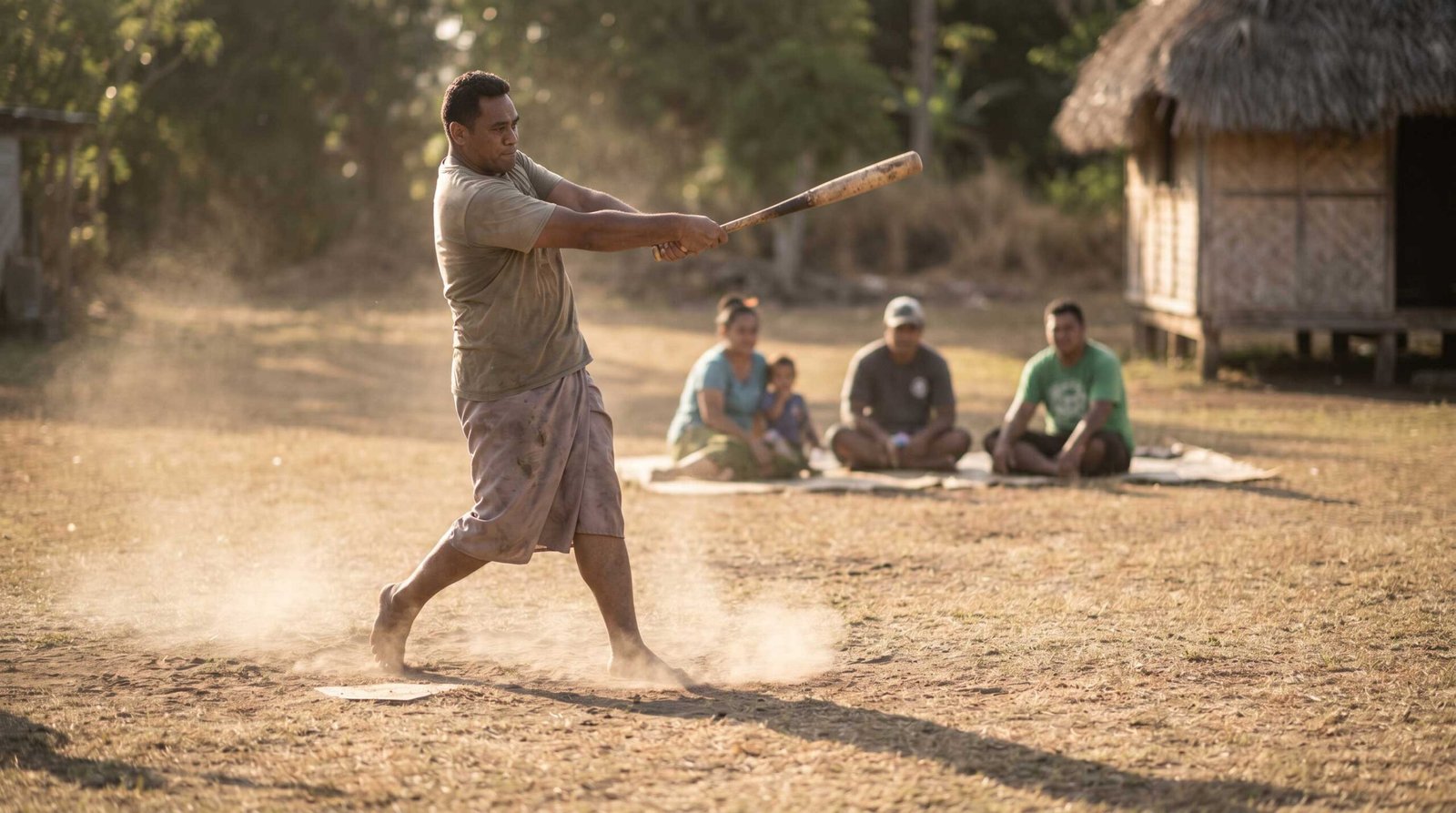
I have spent years around Pacific sports communities, organizing tournaments, sourcing gear for clubs, and standing on the boundary lines of village grounds from Apia to South Auckland. Kilikiti is not “cricket with a twist.” It is a living cultural institution. Whether you are a curious newcomer, a diaspora player reconnecting with your roots, or a coach looking to introduce your team to something genuinely different, this guide will give you the practical knowledge and cultural context that most explainers simply skip over.
Let us get into it.
What Kilikiti Actually Is (And Why It Is Not Just “Samoan Cricket”)
Kilikiti, sometimes spelled kirikiti, is the national sport of Samoa and a fixture across Polynesia, including Tuvalu, Tokelau, Niue, Tonga, and the Cook Islands. The name itself is a phonetic adaptation of “cricket,” which missionaries and sailors introduced to the Pacific in the early 1800s. But Samoans did what they have always done with foreign imports: they adapted it, enlarged it, and turned it into something unmistakably their own.
Unlike standardized cricket, kilikiti was never designed to be a closed, elite competition. It was built for everyone. A single match can involve 10 to 20 players per side, or more. Children bat alongside grandparents. Women bowl to men. The only real limit is how many people your village can fit on a field.
The core philosophy is communal participation, not rigid competition. That distinction matters because it shapes everything from the equipment to the etiquette.
How Kilikiti Is Played: The Real Rules
Here is where most articles get vague. They tell you the rules are “flexible” and move on. That is unhelpful if you are trying to field a team. Let me break down what actually happens on the ground.
The Basics That Mirror Cricket
- Two teams alternate between batting and fielding.
- Two batters are on the pitch at any time, one at each end.
- Bowlers deliver from alternating ends.
- Batters can be dismissed bowled, caught, run out, or stumped.
The Differences That Matter
Two wicketkeepers, not one. This is the first thing that shocks cricket players. Because bowling alternates ends after every delivery, a wicketkeeper stands behind each set of stumps. If the batter misses and the keeper collects, they can immediately bowl to the batter at the opposite end. It keeps the game moving at a relentless pace.
No fixed team size. In a formal NZKA (New Zealand Kilikiti Association) tournament, you might see 15-a-side or 20-a-side matches.
In a village game, the numbers are whoever shows up. I have seen 25 fielders spread across a ground that had no boundary rope, just coconut trees, a church hall, and the lagoon.
The pitch is short and fast. A kilikiti pitch is roughly 20 yards (about 18 meters), significantly shorter than a cricket pitch. Some are concrete; others are rolled dirt. The shorter length means the ball gets to the batter quickly, and with the unique bat shape, shots fly in unpredictable directions.
Runs work differently depending on where you play. In traditional village kilikiti, there are often no boundaries. The ball can roll into the bush, splash into the sea, or lodge in a breadfruit tree. Fielders chase it down, and runs accumulate until the ball is returned. In standardized NZKA play, boundaries score 2, 4, or 6 runs to keep matches television-friendly.
Time limits keep things moving. Modern tournament rules typically give each team 30 minutes to bat or a set number of balls (often 60). The second team chases the same number of deliveries, not a time limit, which prevents slow over-rates from deciding a match.
How You Actually Get Out
The modes of dismissal are familiar to cricketers, bowled, caught, run out, stumped, but with a kilikiti twist. Because the stumps are often taller and lack bails, “bowled” means the ball has struck the stumps hard enough to dislodge them or convince everyone the batter is gone. In village games, the honor system applies. Argue with the faiaoga (the team captain/whistle-blower who leads the chants and sledging), and you will quickly become the day’s entertainment.
The Gear: What You Actually Need
This is where my background in sports equipment really matters. Kilikiti gear is deceptively simple, but the details determine whether you look like a participant or an impostor.
The Kilikiti Bat (Pate or Lapalapa)
The kilikiti bat is the sport’s signature. Modeled on the three-sided Samoan war club called the lapalapa, it features a triangular cross-section and can measure over 1 meter in length, some reach 1.2 meters or more.
What it is made of: Traditional bats are carved from dense island woods like hibiscus or breadfruit. The blade is triangular for weight distribution, and the handle is lashed with sennit, coconut husk fiber binding that provides grip even when hands are sweaty.
What to look for: If you are buying or commissioning a bat, check the weight balance. A good pate should feel heavier in the blade but manageable in the handle because kilikiti batting relies on powerful overhead strokes, not cricket-style defensive blocks. The wood should be seasoned; green wood cracks under impact.
Expert tip: Do not treat a pate like a cricket bat. The angled blade means the ball comes off unpredictably. Practice your grip and swing before a match. I have seen experienced cricketers completely mis-time their first dozen shots because they tried to play straight.
The Kilikiti Ball
The kilikiti ball is approximately 65mm in diameter and is constructed from hard rubber wrapped in pandanus leaves. Traditionally, the rubber core came from latex extracted from the pulu vao tree (Castilla elastica).
Why it matters: It is noticeably softer than a regulation cricket ball. That is why kilikiti players wear no pads, no helmets, and no gloves. The ball will leave a bruise, but it will not break a finger.
Modern alternatives: Most teams outside Samoa now use manufactured rubber balls wrapped in synthetic pandanus or heavy-duty tape. If you are organizing a tournament, buy in bulk and check consistency. A ball that is too light will not carry to the fielders; too heavy, and it becomes dangerous on a short pitch.
The Stumps (Olo)
Kilikiti stumps are typically three upright rods, often made from gagie wood or bamboo, and they usually lack bails.
They are frequently taller than cricket stumps, sometimes up to chest height, and placed slightly closer together.
Practical note: In village games, I have seen stumps improvised from PVC pipe, broom handles, or even anchored chilly bins. Do not overthink it. The spirit of the game matters more than the exact specifications.
What to Wear
Here is the gear question I get most often: “Do I need cricket whites?” No. You need a lavalava.
Traditional kilikiti attire is the lavalava, a wrap-around garment worn by men and women, often paired with a simple T-shirt or singlet.
In competitive or diaspora settings, teams often wear matching colored lavalavas and team shirts.
Performance considerations: If you are playing in a modern tournament or on artificial turf, a standard cotton lavalava can be restrictive. Look for lightweight, quick-dry fabrics that allow a full range of motion for running, fielding, and bowling. Footwear is optional; many players still go barefoot on grass or dirt, but gym shoes are increasingly common on harder surfaces.
Mistake to avoid: Do not show up in full cricket pads or helmets. You will look ridiculous, and more importantly, you will signal that you do not understand the culture. Kilikiti is played without protective gear because the equipment and the spirit of the game make it unnecessary.
The Culture: Why Kilikiti Is More Than a Game
If you treat kilikiti as just another bat-and-ball sport, you will miss the entire point. I have watched matches that lasted three days, not because the scoring was slow, but because the game was interwoven with church services, feasts, and ceremonial blessings.
Fa’a-Samoa on the Field
Kilikiti is an expression of Fa’a-Samoa, the Samoan way of life. Before and after matches, teams line up to receive fa’amanuaiaga (blessings) from elders.
Win or lose, you thank your elders, your church, and your hosts. This is non-negotiable.
The Social Structure of a Match
A traditional kilikiti match is a village event. The host village is responsible for feeding everyone, players, spectators, and visiting teams. In fact, the only universal rule across many traditional games is this: if the host cannot provide enough food, they forfeit. That tells you everything about priorities.
Lape and Faiaoga: The Soundtrack of the Game
Every kilikiti match has music. The lape are the cheerleaders, often an entire group from the village, who sing, clap, and dance to support their batters.
When a wicket falls, the faiaoga (the team captain with a whistle) leads the celebration, often mock-chasing the dismissed batter off the field while the team dances and chants. It is theatrical, humorous, and deeply communal.
Expert insight: If you are new to the sport, do not be offended by the sledging. It is ritualized, musical, and rarely personal. The best response is to smile, play better, and prepare your own team’s chants for when you take a wicket.
Diaspora and Revival
In New Zealand, kilikiti has become a critical tool for cultural preservation. The Counties Manukau Kilikiti Association and events like “Kilikiti at the Basin” (held at Wellington’s historic Basin Reserve in 2024 and 2025) are using the sport to reconnect New Zealand-born Samoans with their language, church communities, and elders. Women are increasingly involved, with all-female teams now competing in major tournaments.
Getting Started: A Practical Checklist for New Players and Organizers
If you are ready to play or start a team, here is exactly what to do:
- Find your community. Search for a local kilikiti association (the NZKA is the most organized body, but Australian and US-based clubs exist). Church groups are often the best entry point.
- Get the right bat. Commission a traditional pate from a Samoan carver if possible, or source one through a Pacific cultural group. Avoid trying to adapt cricket bats.
- Source rubber balls. Look for “polo kilikiti” or Samoan cricket balls, minimum 65mm diameter.
- Dress appropriately. Wear a lavalava or team-issued wrap. If you are organizing a team, invest in matching team lavalavas. It signals respect and builds unity.
- Learn the chants. Ask elders or experienced players to teach you the basic lape chants. Participation matters more than perfection.
- Bring food. If you are hosting, budget for a feast. If you are visiting, bring a contribution. Kilikiti is as much about the meal as the match.
- Leave the ego at home. There are no professional contracts here. Play hard, laugh louder, and thank your hosts.
Frequently Asked Questions
What is the difference between kilikiti and cricket? Kilikiti uses a three-sided wooden bat (pate), a softer rubber ball wrapped in pandanus, two wicketkeepers, no fixed team size, and no protective gear. The rules are traditionally flexible, and the cultural elements, singing, dancing, and feasting, are integral to the experience.
How many players are on a kilikiti team? There is no fixed number. Village games can include 10 to 20+ players of any age or gender. Standardized tournaments often use 15 or 20 players per side.
What is a kilikiti bat called? The bat is called a pate or lapalapa. It is modeled on the Samoan war club, features a triangular blade, and can exceed 1 meter in length.
What is the kilikiti ball made of? It is made from hard rubber (traditionally from the pulu vao tree) wrapped in pandanus leaves. It is softer than a cricket ball, which is why no protective padding is worn.
Do you need protective gear to play kilikiti? No. Because the ball is softer and the game is traditionally played without pads, helmets, or gloves, protective gear is unnecessary and would be culturally out of place.
Where is kilikiti played today? Kilikiti remains popular in Samoa, American Samoa, Tuvalu, Tokelau, Niue, and Tonga. It has a strong and growing presence in New Zealand, Australia, and Hawaii through Pacific diaspora communities.
Can women and children play kilikiti? Absolutely. Kilikiti is explicitly inclusive. Women and children have always participated, and recent tournaments in New Zealand have featured all-female teams alongside mixed and men’s sides.How long does a kilikiti match last? Traditional village matches can last multiple days. Modern standardized tournament matches are typically 70 minutes total, 30 minutes per innings, with the second team batting the same number of balls faced by the first.