

The 2026 World Cup Is Not Just Bigger. It’s a Different Sport.
If you’ve been following international football for more than a decade, you know the rhythm of a World Cup summer: 32 teams, eight groups, 64 matches, and a month of collective global holding-of-breath. It was predictable. It was beautiful. And starting June 11, 2026, it is gone.
The FIFA World Cup 2026™ introduces a 48-team, 104-match format spread across 16 venues in the United States, Canada, and Mexico. As someone who has spent years outfitting athletes and fans across multiple sports, from soccer academies in Europe to kilikiti clubs in the Pacific, I can tell you this: the expansion is not just a numbers game. It changes how teams prepare, how fans engage, and what they wear while doing it.
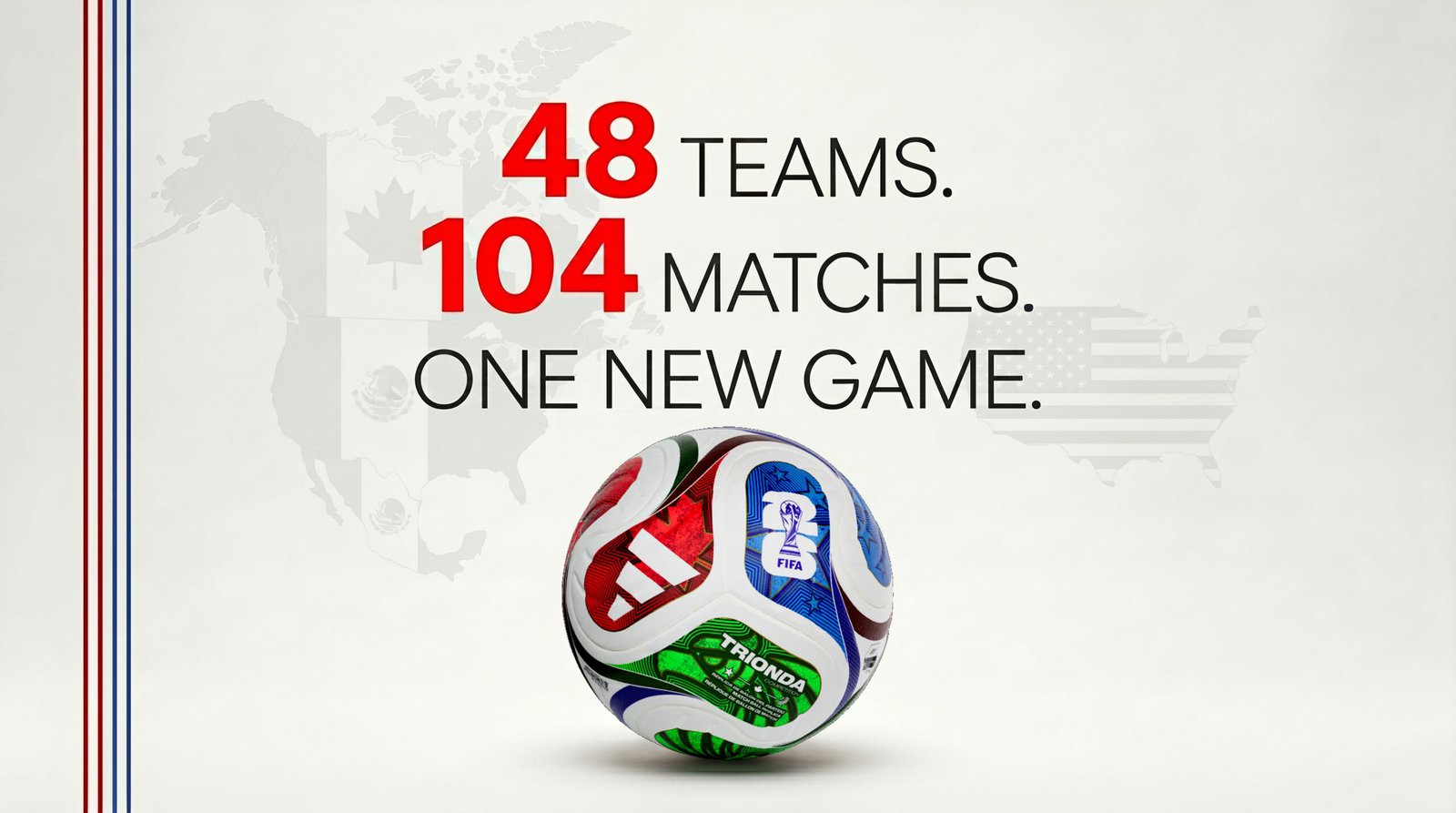
This guide breaks down exactly what the new format means, why FIFA made the shift, and how players, coaches, and supporters can adapt, with practical insights you won’t find in a press release.
What Actually Changed? The 2026 Format Explained
Let’s cut through the confusion. The 2026 tournament keeps the four-team group structure fans know, but multiplies it:
- 48 teams divided into 12 groups of four (up from 8 groups)
- 72 group-stage matches (up from 48)
- Top two teams from each group advance automatically
- Eight best third-place teams also advance, creating a new Round of 32
- 104 total matches over 39 days, culminating in the Final on July 19, 2026
For the first time in history, the two finalists will play eight matches instead of seven to lift the trophy. That single extra game is not trivial. It rewrites conditioning protocols, squad rotation strategy, and recovery timelines for elite athletes.
Why FIFA Expanded the Tournament
FIFA’s stated goal is inclusivity. More nations mean more global representation, more revenue, and more developmental pathways for emerging football markets. Africa’s quota jumps from 5 to 9+ slots. Asia increases from 6.5 to 8.3. CONCACAF (North/Central America and Caribbean) expands from 3.5 to 6.7. Even Oceania receives a guaranteed full slot for the first time.
The logic is sound: football has grown beyond the traditional power centers. Morocco’s semifinal run in 2022 and Japan’s victories over Germany and Spain proved that the gap between “elite” and “emerging” is narrowing. But expansion also introduces real risks, diluted group-stage intensity, lopsided early matchups, and an unprecedented physical load on players already stretched by club schedules.
How the New Format Changes the Game Itself
1. Squad Depth Becomes the Deciding Factor
In a 32-team World Cup, a starting eleven with one or two generational talents could carry a team through the group stage. In 2026, that math breaks.
With eight knockout matches required to win, managers must treat their 26-man roster like a rotating platoon, not a starting lineup plus backups. Teams with thin benches, common among newly qualified nations, will face a brutal reality: match three of the group stage is no longer the finish line; it is the warm-up.
Expert tip from the training ground: If you are coaching or conditioning for a national team program, build your camp around positional redundancy. You need two viable starters at every position, not one star and a hopeful. The teams that win in 2026 will be the ones whose 18th man could start a quarter-final without panic.
2. The “Third-Place Safety Net” Changes Group-Stage Psychology
In previous tournaments, a loss in match one often meant terminal pressure in match two. Now, with eight of twelve third-place teams advancing, a single defeat is no longer a death sentence.
This creates two distinct strategic approaches:
- Aggressive teams (traditional powers) may rotate earlier, knowing a slip won’t eliminate them.
- Cautious teams (debutants or smaller nations) may play for draws and goal-difference survival, producing tactically conservative football that frustrates neutral viewers.
Mistake to avoid: Do not assume your team needs three wins to advance. Coaches who burn out their starters chasing group-stage perfection may enter the Round of 32 with empty tanks while a smarter opponent rested key players and peaked at the right moment.
3. Travel Becomes a Tactical Variable
The 2026 World Cup is hosted across three massive countries, the USA, Canada, and Mexico, with venues spanning from Vancouver to Miami, and from Guadalajara to Boston.
In past tournaments, teams typically based in one region and traveled minimally. In 2026, a team could conceivably play group matches in Seattle, Houston, and Toronto, then draw a knockout fixture in Los Angeles. That is not just logistics. It is jet lag, climate adaptation (humid Miami vs. dry Mexico City), and time-zone disruption.
Real-world scenario: A European team based on the East Coast for group play, then drawn against a Central American opponent in Guadalajara for the Round of 32, faces a 7,000-foot altitude shift with 48 hours of recovery. The team that prepared for this, with acclimatization camps, compression travel gear, and hydration protocols, holds an edge that has nothing to do with tactics.
What the Expanded Format Means for Fans and Culture
More Nations, More Stories, More Merchandise
Forty-eight teams means 48 fan cultures, anthems, and color palettes descending on North America. For a sports apparel business like ours at Athloxine, this is not a footnote, it is the story.

We have seen this before. When Iceland qualified for Euro 2016, their fan-clap became a global phenomenon and their away-kit colorways sold out across continents. When Morocco reached the 2022 semifinal, their jerseys became symbols far beyond football. The 2026 expansion multiplies those opportunities.
What fans actually need: Traveling supporters for 2026 are not just buying a jersey. They need:
- Layered travel kits for stadiums ranging from air-conditioned domes to open-bowl humidity
- Recovery-focused travel apparel (compression, moisture management) for fans chasing teams across three countries
- Cultural crossover gear that respects national identity while functioning in streetwear contexts
This is why Athloxine’s custom-made lifestyle and streetwear lines, alongside our LOX Certified soccer and running collections, are built for exactly this moment, gear that performs in a stadium and looks right in a fan zone.
The Commercial Window Just Doubled
A 39-day tournament with 104 matches does not just sell more tickets. It extends the commercial heartbeat of the World Cup by nearly two weeks. For retailers, publishers, and apparel brands, the traditional “four-week sprint” becomes a six-week marathon.
Practical implication: If you are planning merchandise drops, content calendars, or fan-event sponsorships, spread them. The audience does not peak on opening day and fade after the group stage. With a Round of 32 keeping more nations alive longer, engagement stays elevated through the first week of July.
The Hidden Challenges Nobody Talks About
Player Welfare Under Pressure
The 2026 format adds roughly 40 extra matches to the tournament calendar. For players who already navigate 60+ club matches per season, this is not sustainable without intervention.
FIFA has expanded substitution rules and mandated longer rest windows between matches, but the fundamental issue remains: the athletes who reach the final will have played the equivalent of an extra club season in compressed time.
What this means for gear: Recovery apparel, compression tights, temperature-regulating base layers, and travel-specific footwear, moves from “nice to have” to “performance essential.” At Athloxine, we design our Gym/Fitness and Running/Outdoor collections with exactly this load-management philosophy: gear that supports the body between performances, not just during them.
The Risk of Diluted Spectacle
Critics argue that adding 16 teams risks lopsided scorelines and dead-rubber group games. Germany’s 7-1 opening win against Curaçao in the early fixtures has already fueled that debate.
But here is the counter-argument that history supports: the World Cup’s most enduring memories often come from the underdogs. Cameroon in 1990. Costa Rica in 2014. Morocco in 2022. Expansion does not eliminate those stories; it creates more slots for them. The challenge for FIFA and broadcasters is framing the narrative so fans understand that a 48-team field is a festival, not just a bracket.
Gear Up for 2026: What Players, Coaches, and Fans Should Pack
Having outfitted teams from combat sports to cricket tours, here is my field-tested packing and preparation logic for the 2026 environment:
For Players and Staff
- Climate-adaptive base layers: You may play in Seattle’s mild June (60°F / 15°C) and Houston’s humidity (90°F+ / 32°C+) within a week. Pack merino-blend and synthetic options.
- Compression recovery sets: For post-match travel. The extra knockout round means one more high-intensity recovery cycle.
- Altitude-aware training gear: If your camp includes Mexico City (7,350 ft), train in lightweight, breathable fabrics that dissipate heat faster, the body works harder at altitude.
For Traveling Fans
- Versatile outerwear: A puffer jacket for Vancouver evenings, a waterproof shell for Miami thunderstorms, and a breathable mid-layer for Toronto. Athloxine’s outerwear line is built for exactly this multi-climate chase.
- Stadium-to-street footwear: You will walk more than you think. Pack running/training hybrids that handle 15,000 steps and still look right at a watch party.
- National team layers with neutral basics: One authentic jersey per team you support, paired with black or earth-tone Athloxine streetwear that mixes with anything. You cannot pack 48 kits; pack four that work with everything.
FAQ: FIFA World Cup 2026 Expanded Format
How many teams are in the 2026 World Cup?
48 teams, expanded from the 32-team format used since 1998.
How many matches will be played at the 2026 World Cup?
104 matches total, 72 in the group stage and 32 in the knockout rounds, up from 64 matches in previous editions.
How do teams advance from the group stage?
The top two teams from each of the 12 groups automatically advance. The eight best third-place teams also advance to a new Round of 32.
When is the 2026 World Cup final?
Sunday, July 19, 2026. For the first time, finalists will have played eight matches to reach that stage.
Which countries are hosting the 2026 World Cup?
The United States, Canada, and Mexico, the first three-nation host in FIFA World Cup history.
Will the expanded format lower the quality of play?
There is a risk of mismatched early fixtures, but history shows underdog performances often produce the most memorable tournaments. The format also forces elite teams to manage squad depth more carefully.
What should fans wear to 2026 World Cup matches?
Layered, climate-adaptive clothing. Venues span from cool Vancouver to humid Miami and high-altitude Mexico City. Moisture-wicking base layers, versatile outerwear, and comfortable stadium-to-street footwear are essential.
How does the longer tournament affect player recovery?
The extra knockout round and additional rest-day requirements make recovery gear, compression apparel, temperature-regulating layers, and travel-friendly training wear, critical for sustained performance.
About the Author
This guide was written by the Athloxine editorial team, a group of former athletes, coaches, and apparel designers with combined decades of experience in professional sports. We have outfitted teams across six continents, from LOX Certified soccer academies to custom cricket tours, and we design every product with the real-world demands of multi-climate, high-frequency competition in mind. We do not just write about the World Cup. We build the gear that survives it.
Ready for the Biggest World Cup Ever?
Whether you are a player navigating eight matches to the final, a coach managing squad rotation across three countries, or a fan chasing your team from Seattle to Guadalajara, the 2026 World Cup demands more from your gear, and your preparation.