
Have you ever watched an NBA Finals game and wondered what that ball went through before LeBron James or Stephen Curry first palmed it?
I have. After fifteen years in sports apparel manufacturing, visiting tanneries in Chicago, assembly facilities in Asia, and testing labs in the American South, I’ve learned that the journey of an official NBA basketball is one of the most fascinating supply chain stories in modern sports. It spans five countries, involves materials most people never think about, and ends with a ritual that elite athletes treat as sacred.
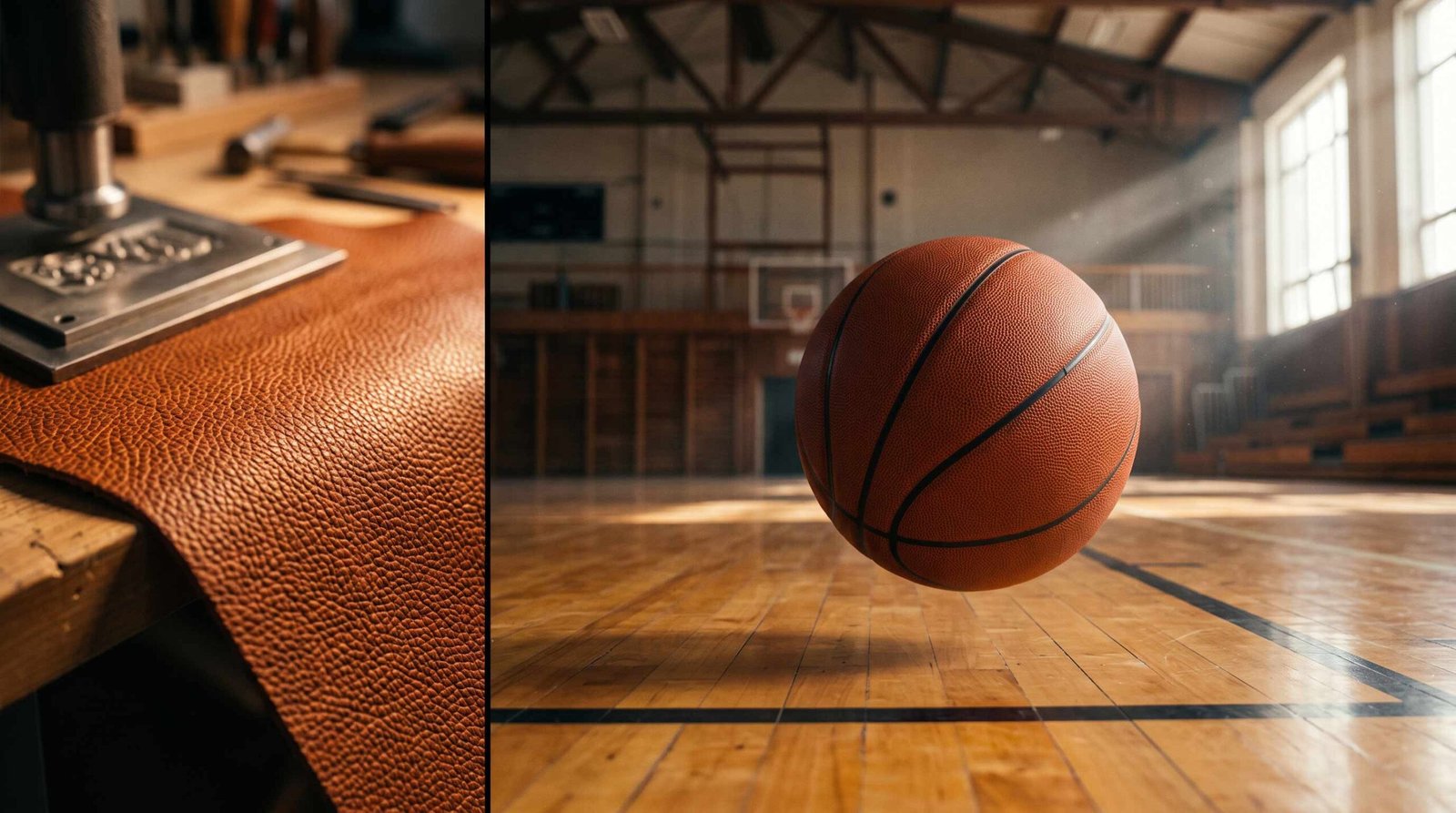
This article traces that complete journey. More importantly, it extracts lessons that sports clothing brands, team managers, and B2B buyers can apply to their own manufacturing and quality control processes. Whether you’re sourcing custom basketball jerseys or building a full athletic apparel line, the principles behind an NBA Finals basketball will make you a sharper buyer.
The Hidden Supply Chain Behind Every NBA Finals Bounce
Most viewers see the NBA Finals as a clash of superstars. What they don’t see is the global logistics network that makes the game possible.
An official NBA game ball is not “manufactured” in one place. It is assembled from components sourced across North America, Asia, and Europe. The court beneath the players’ feet follows a similarly complex path. Understanding this network is essential for anyone in the sports apparel business because the same principles, multi-source sourcing, rigorous quality control, and athlete-centric design, apply whether you’re making basketballs or moisture-wicking shooting shirts.
The 2026 NBA Finals between the New York Knicks and San Antonio Spurs averaged 20.6 million viewers on ABC and ESPN, making it the most-watched Finals in 28 years. That level of global attention means zero failure tolerance. Every ball must bounce identically. Every court plank must absorb impact uniformly. The supply chain is engineered for perfection because the world is watching.
From Iowa Cattle to Chicago Tannery: The Leather Origin
The Horween Leather Legacy
The journey begins not in a factory, but in a slaughterhouse. The official NBA game ball, currently manufactured by Wilson Sporting Goods, uses genuine cowhide leather sourced almost exclusively from Horween Leather Company in Chicago, one of the oldest continually running tanneries in the United States.
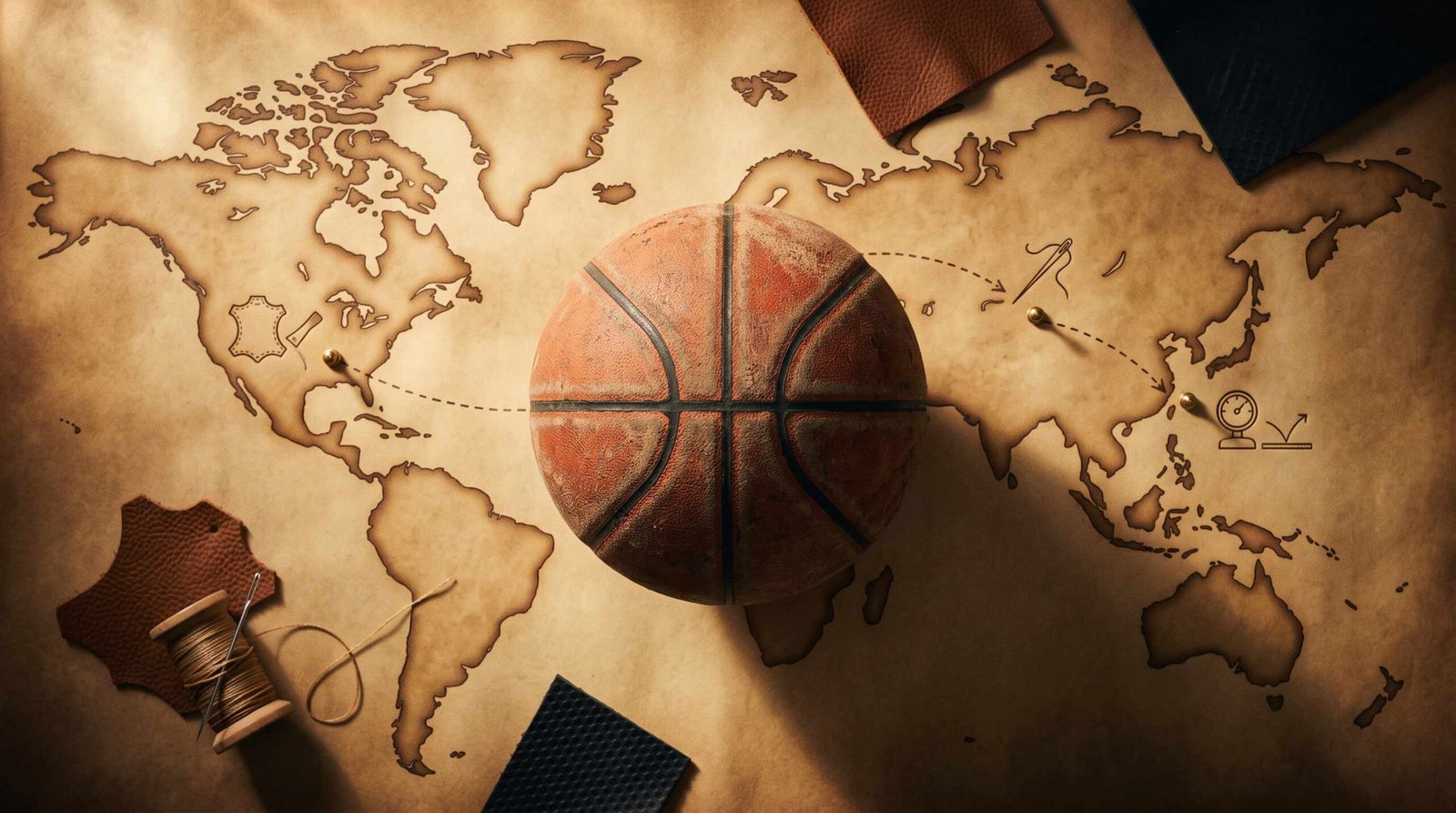
Horween receives roughly 3,000 cattle hides per week, primarily from slaughterhouses in Iowa and Ontario, Canada. These hides undergo a nearly three-week transformation:
- Hair removal and cleaning – The raw hides are stripped and prepared.
- Tanning and splitting – Hides are split to precise thickness and re-tanned in large rotating drums.
- Embossing – A 1,000-ton press with German-made embossing plates creates the distinctive pebbled texture that gives players their grip.
- Finishing and drying – Color, durability, and feel are calibrated to NBA specifications.
Skip Horween, president of the family business, has noted that NBA players can detect the most subtle variations in leather texture. “They might not necessarily tell you what’s different, but they can tell you that it is different almost instantaneously.” That is why Horween spent 11 years sending samples to Spalding (the former NBA ball manufacturer) before finally earning the exclusive contract.
Expert Insight: For sports apparel brands, this is a masterclass in supplier persistence. Horween didn’t change their product to meet a lower standard; they refined their process until it exceeded expectations. When sourcing fabrics for your own athletic lines, whether polyester blends for basketball jerseys or compression gear, prioritize suppliers who iterate with you, not ones who rush to “good enough.”
The Anatomy of an Official NBA Game Ball
Components Sourced Globally
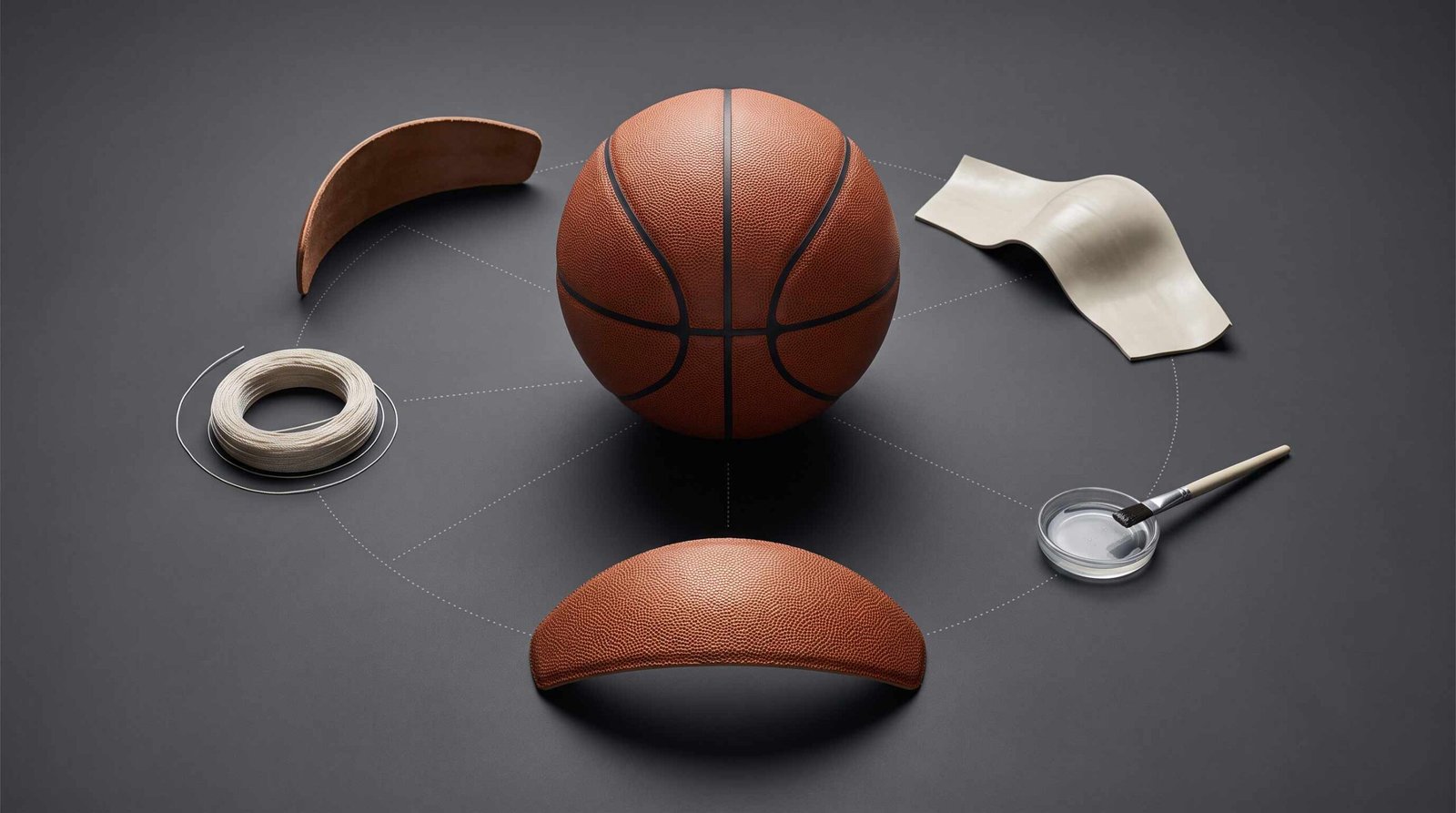
Once the leather is ready, roughly 10,000 square feet of it is shipped four to five times per year to a manufacturing facility in China. But leather is only the outer layer. Inside, the ball is a symphony of international materials:
| Component | Origin | Purpose |
| Nylon winding | Japan | Forms the outer structure of the inflated bladder, providing shape retention and structural integrity |
| Rubber bladder | Malaysia & Vietnam | Holds air pressure; creates the “feel” of the ball |
| Leather panels | USA (Chicago) | Outer grip and durability |
| Adhesives | Varies | Bonds the eight panels together |
Each basketball takes approximately four days to assemble. The eight leather panels are glued together by hand, a detail that surprises many people who assume elite sports equipment is fully automated.
The Specifications That Matter
The NBA does not leave ball quality to chance. Every official game ball must meet these exact standards:
- Circumference: 29.5 to 29.75 inches
- Inflation pressure: 7.5 to 8.5 PSI
- Bounce height: 52 to 56 inches when dropped from 6 feet
- Weight: Precisely regulated for consistency
These specifications are tested rigorously before any ball sees an NBA court. But the testing doesn’t happen in China, it happens in Alabama.
The Alabama Testing Gauntlet
After assembly in China, the balls travel via ocean freight to Alexander City, Alabama, where they undergo a three-to-four-week testing process. This facility, historically tied to Russell Athletics (which acquired Spalding in 2003), subjects every ball to:
- Dimensional checks – Ensuring exact circumference and weight
- Rebound testing – Dropping balls from six feet to verify 52–56 inch bounce height
- Hardwood simulation – Balls are fed into wooden wheels that catapult them into maple plates, mimicking the impact of an NBA court
This “break-in” machine bounces each ball about 50 times to wake up the leather and begin the softening process. However, as Spalding’s former senior VP Paul Sullivan noted, machine breaking cannot replicate human play: “It’s the sweat from the athletes, the oils from their hands, the dirt from the court, all those things, that’s the only way to truly break in a leather basketball.”
Real-World Scenario: Imagine you’re a B2B buyer launching a custom basketball jersey line. You receive a sample that looks perfect in photos but feels stiff against the skin. Do you approve it? The NBA’s testing protocol teaches us that simulated testing (machines, photos, spec sheets) is never a substitute for real-world testing (athletes, sweat, movement). Always demand wear-testing before bulk approval.
Why the NBA Almost Switched to Synthetic (And Quickly Reversed)
In 2006, the NBA attempted to introduce a polyurethane composite basketball. The rationale was logical: synthetic balls were cheaper to produce, more consistent in manufacturing, and avoided the variability of natural leather.
The result was a disaster.
Players immediately complained about the feel. The ball was too slippery when dry and too sticky when sweaty. Worse, the rebound height differed from leather balls, a critical flaw for athletes who have spent years calibrating their shooting touch to a specific bounce.
The NBA Players Association filed two unfair labor practice charges with the National Labor Relations Board. The league reversed course within months, returning to genuine leather.
Lesson for Sports Apparel Brands: Performance athletes are incredibly sensitive to material changes. If you’re switching from cotton to a recycled polyester blend, or from traditional stitching to seamless construction, do not make the change silently. Involve your end-users early. The 2006 synthetic ball fiasco cost the NBA millions in reputation and logistics; a similar misstep in apparel could cost you a wholesale contract.
The Court Beneath the Champions: Robbins Maple Hardwood
A basketball’s journey doesn’t end with the ball itself. The surface it bounces on is equally engineered.
Robbins Sports Surfaces, founded in 1894, has become the primary provider of NBA game courts. By the 2025–2026 season, more than half of all NBA franchises relied on Robbins for their primary game floors, including the Lakers, Warriors, Celtics, and Thunder.
The process is remarkable:
- Northern Hard Maple Harvesting – Almost all NBA courts use northern hard maple harvested from forests above the 35th parallel. This wood is denser and more durable than southern varieties.
- Manufacturing in Ishpeming, Michigan – Robbins manufactures its courts in a small Upper Michigan town, where workers take immense pride in knowing their floors host the NBA Finals. Plant Manager Jeff Adriano notes: “I want the people in this area to have a sense of pride knowing that when they’re watching the NBA Finals, they know that floor was more than likely made right here in Ishpeming.”
- Precision Engineering – Robbins’ patented systems like the MVP (Most Valuable Floor) are designed with biomechanical research to reduce athlete injury risk while optimizing energy return.
Of the last 27 NBA Championships, 22 were won by teams who play or train on Robbins floors. While correlation isn’t causation, the statistic speaks to the trust elite organizations place in precision manufacturing.
The Global Logistics Web: Ocean Freight to Arena Floor
From factory to Finals, the logistics chain looks like this:
Raw Materials Phase:
Iowa/Canada → Chicago (Horween Tannery): ~1–2 weeks
Chicago → China (Ball Assembly): ~4–6 weeks by ocean
Manufacturing Phase:
China assembly: ~4 days per ball
China → Alabama (Testing): ~3–4 weeks by ocean
Distribution Phase:
Alabama → 30 NBA teams: ~2–4 weeks
Teams break in balls over 2+ months before season
Court Logistics:
Ishpeming, Michigan → NBA arenas: Custom flatbed trucks, climate-controlled
Installation: 1–2 days with Robbins’ RapidLatch system
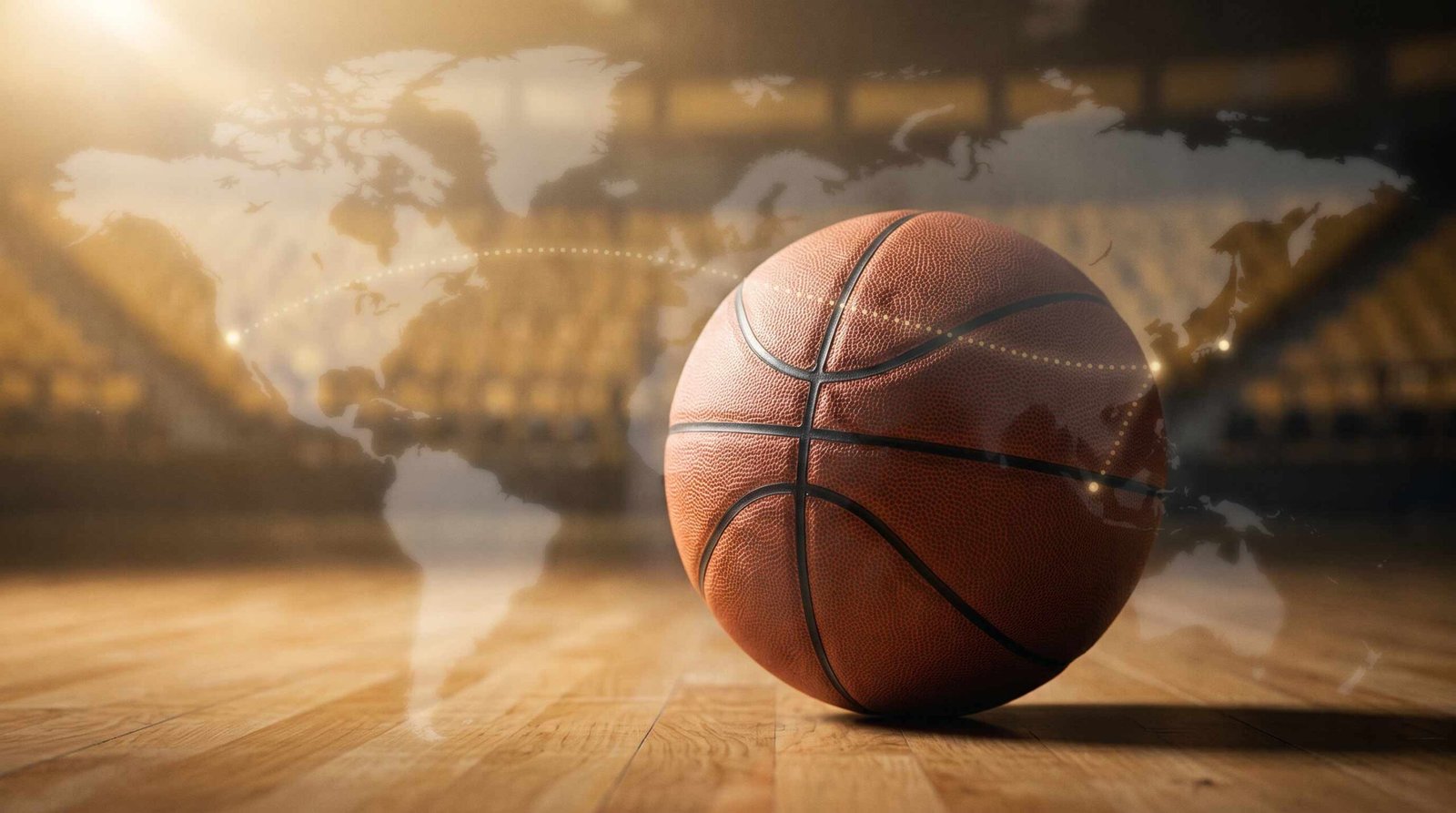
The entire cycle, from cattle hide to opening tip, takes roughly 6 to 8 months. For the NBA Finals specifically, the balls used are not freshly manufactured; they are carefully selected from the season’s batch, chosen by players and referees for their specific feel.
Player Rituals: Why a Broken-In Ball Beats a New One
Here’s where the supply chain meets human psychology.
Before every game, referees present three basketballs to team representatives. Players like Stephen Curry and LeBron James inspect each ball, rolling it, squeezing it, dribbling it. Curry has said he prefers a ball at a “6 out of 10” wear level: broken in, softer, with some texture from court dirt and sweat.
Eric Housen, the Warriors’ equipment manager, explains: “If you take the new balls out of the box … and you shoot for an hour, the tips of your fingers will be bloody, just because the thread is so new. Then, over time, the dirt that it picks up on the floor, the sweat, everything, it starts to turn it brown. Right before it gets from orange to brown is kind of where they want to play.”
Russell Westbrook’s pre-game ritual is even more elaborate: the Thunder’s security staff personally delivers the game ball to his locker room, where he inspects it, rubs it, dribbles it, holds it, smells it, and then passes it to teammates for approval.
What This Means for Apparel Brands: Your end-users are just as particular as NBA players. A basketball team ordering custom warm-up suits will notice if the zipper catches, if the fabric pills after three washes, or if the sizing runs inconsistent. The NBA’s ball-selection ritual proves that quality is not just about specs, it’s about feel, consistency, and trust built over time.
What This Means for Your Sports Apparel Supply Chain
At Athloxine, we don’t manufacture basketballs ourselves. However, through our global network of ISO-certified factory partners, we can get them manufactured to the same exacting standards, whether you need official-spec game balls, training balls, or branded merchandise for your team. More importantly, we apply those same rigorous principles to every LOX Certified and Custom Made product we produce:
Multi-Source Material Strategy
The NBA ball uses leather from the USA, nylon from Japan, rubber from Southeast Asia, and assembly in China. This diversification reduces risk. Our apparel sourcing follows a similar model: we maintain relationships with certified fabric mills across multiple regions to ensure continuity even when one market faces disruption.
ISO-Certified Quality Management
The NBA’s testing protocols in Alabama mirror what ISO 9001:2015 demands: documented procedures, measurable quality objectives, and corrective action systems. At Athloxine, our manufacturing partners operate under ISO 9001:2015 and ISO 14001 environmental standards, ensuring that your custom basketball jerseys, compression gear, or team warm-ups meet consistent benchmarks.
Athlete-Centric Design
Wilson’s decision to return to leather after the 2006 synthetic failure was driven by one thing: player feedback. We follow the same philosophy. Before any new Athloxine product reaches bulk production, we test it with real athletes, basketball players, football teams, combat sports fighters, to validate fit, durability, and performance under actual conditions.
The Break-In Principle
NBA players prefer balls that have been used. In apparel, this translates to pre-washed fabrics and garment-dyed finishes that eliminate the stiff “new clothes” feel. When we produce custom lifestyle or streetwear lines, we offer enzyme washes and softening treatments so your customers get that “favorite shirt” feel from day one.
Expert Tips for B2B Sports Clothing Buyers
After managing supply chains for American Football, Ice Hockey, Soccer, Cricket, and Combat Sports apparel, here are the mistakes I see most often:
Mistake #1: Approving Based on Photos Alone
The NBA doesn’t approve balls from photos. Neither should you approve a 500-unit jersey order. Always request a physical sample and conduct a wear test with at least three athletes of different body types.
Mistake #2: Ignoring the “Bounce Test”
For basketballs, it’s rebound height. For apparel, it’s colorfastness, seam strength, and shrinkage. Specify your testing standards in the purchase order. ISO standards provide excellent frameworks for this.
Mistake #3: Choosing Price Over Partnership
Horween spent 11 years refining their leather before winning the NBA contract. The best manufacturing partners are those who invest in understanding your brand, not just those who offer the lowest unit cost. A factory that asks detailed questions about your end-user is worth more than one that simply says “yes” to everything.
Mistake #4: Neglecting Logistics Timing
An NBA ball takes 6–8 months from cow to court. Custom apparel typically requires 4–8 weeks for sampling and 6–10 weeks for bulk production. Plan your launches backward from your delivery date, adding 2–3 weeks of buffer for international shipping delays.
Frequently Asked Questions
Q1: What company makes the official NBA Finals basketball?
A: Wilson Sporting Goods currently manufactures the official NBA game ball, using genuine Horween leather. Wilson took over from Spalding at the start of the 2021–2022 season and continues to use the same eight-panel configuration and leather supplier.
Q2: How long does it take to make an official NBA basketball?
A: The assembly of a single ball takes about four days. However, the full journey, from cattle hide to finished product, spans roughly 6 to 8 months, including tanning, international shipping, and Alabama-based testing.
Q3: Why did the NBA switch from Spalding to Wilson?
A: The NBA’s partnership with Spalding ended after nearly 40 years, and Wilson was selected as the new official game ball provider starting in the 2021–2022 season. Wilson maintained the same leather source (Horween) and eight-panel design to ensure continuity for players.
Q4: What wood is used for NBA Finals courts?
A: NBA courts are primarily made from northern hard maple, a dense, durable wood harvested from forests above the 35th parallel. Robbins Sports Surfaces, based in Ishpeming, Michigan, is the leading manufacturer of NBA game courts.
Q5: How does the NBA test basketballs before games?
A: Balls are tested for diameter, weight, rebound height (52–56 inches from a 6-foot drop), and inflation pressure (7.5–8.5 PSI). They are also bounced against maple plates to simulate court impact and begin the leather break-in process.
Q6: Why do NBA players prefer used basketballs over new ones?
A: New leather basketballs are stiff and can cause finger abrasions. As balls absorb sweat, court dirt, and oils, the leather softens and darkens, providing better grip and a more predictable bounce. Players like Stephen Curry prefer balls at a “6 out of 10” wear level.
Q7: What can sports apparel brands learn from NBA basketball manufacturing?
A: Three key lessons: (1) Diversify your material sourcing to reduce supply chain risk, (2) Implement rigorous, documented quality control at every stage, and (3) Never substitute real-world athlete testing for simulated or photo-based approvals.
Q8: Does Athloxine manufacture basketballs or basketball apparel?
A: Athloxine specializes in various sport items (The Lineup) including sports apparel, accessories, and equipment. While we do not manufacture basketballs in-house, we can source and manufacture them through our certified factory partners. The same precision sourcing, ISO-backed quality control, and athlete-tested standards apply to everything we produce.
Ready to Build Your Team’s Uniform Line With the Same Precision?
Whether you need custom basketball jerseys for a local league or a full performance apparel collection for your brand, Athloxine’s Lineup division delivers factory-direct quality with ISO-backed processes.
Why teams choose Athloxine:
✅ Low MOQs for teamwear – Start small, scale confidently
✅ Factory-direct production – No middlemen, no markup confusion
✅ ISO 9001:2015 certified partners – Consistent quality, every order
✅ Real athlete testing – Samples validated by players before bulk production
✅ Global shipping with tracking – From our floor to your locker room