
Walk onto any football pitch in the world, from a dusty neighborhood street in São Paulo to a Premier League training ground in Manchester, and there’s a strong chance the ball at your feet was born in one place: Sialkot, Pakistan.
This small industrial city in Punjab province doesn’t dominate headlines like Barcelona or Manchester. It doesn’t host Champions League finals. But when it comes to the actual equipment that makes the beautiful game possible, Sialkot is unmatched. The city produces approximately 70% of the world’s hand-stitched footballs and exports over 40 million balls annually to more than 100 countries.
If you run a sports brand, coach a team, or simply care about where your equipment comes from, understanding Sialkot isn’t just interesting, it’s essential. This is the story of how a single city became the manufacturing backbone of global football, and why that pedigree matters for the quality of the gear you source football sialkot today.
From British Barracks to Global Dominance: The History of Sialkot Footballs
The Sialkot football story didn’t start with a business plan. It started with necessity and curiosity.
In the late 19th century, British soldiers stationed in the region brought football with them. When their leather balls tore, local artisans, already skilled in leatherworking and surgical instrument craftsmanship, began repairing them. By the early 20th century, those repairs turned into replication. Sialkot’s craftsmen weren’t just fixing balls; they were reverse-engineering them, stitch by stitch.
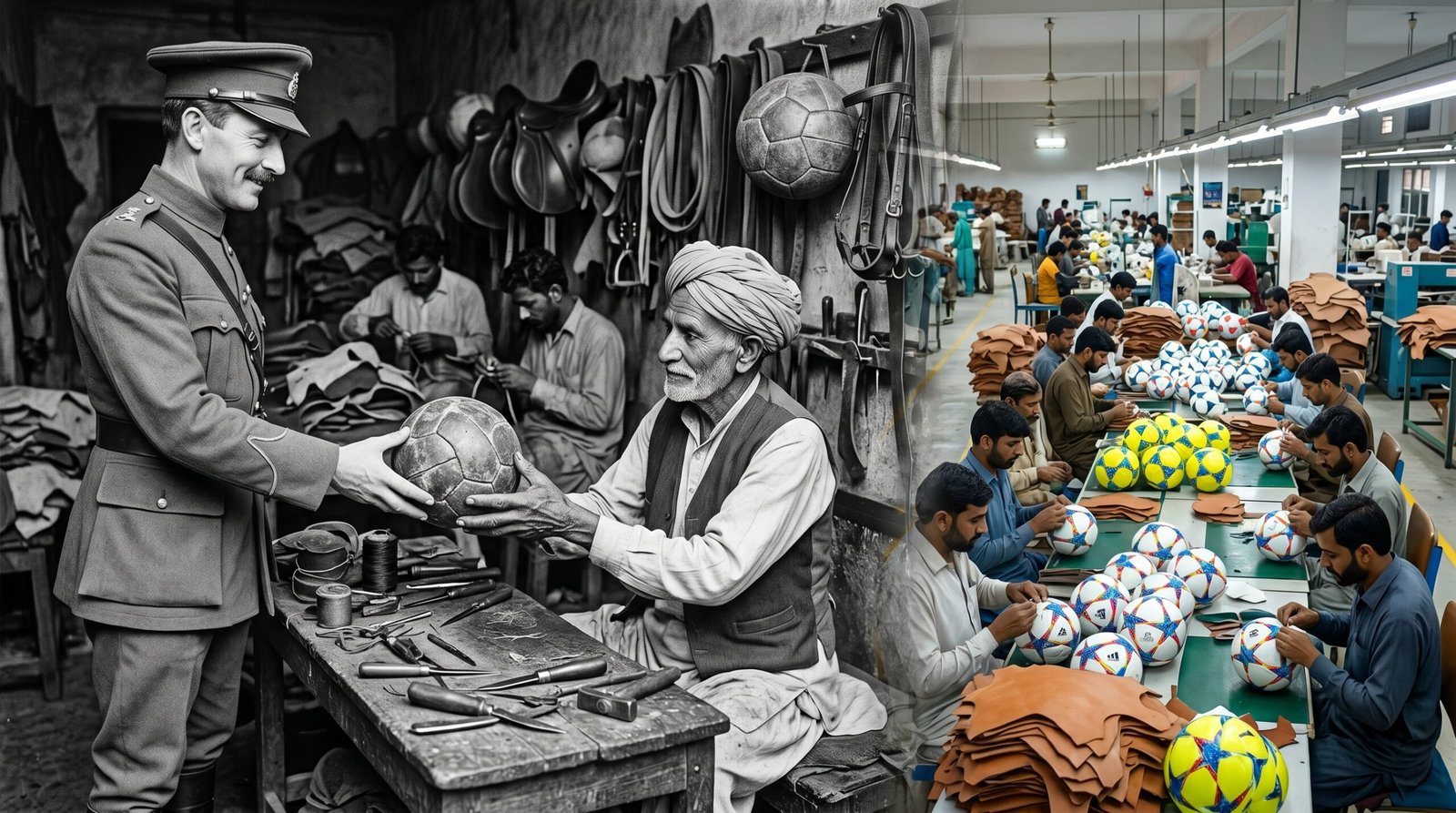
By the 1970s, what began as a cottage industry had evolved into an export powerhouse. International sports brands recognized something the local artisans already knew: Sialkot workers could produce footballs with precision, consistency, and durability that rivaled anything made in Europe.
The key insight? Sialkot didn’t become a football hub because of cheap labor alone. It became one because of generational expertise. Fathers taught sons. Mothers taught daughters. The hand-stitching techniques were passed down like family recipes, except these recipes produced balls that would eventually grace FIFA World Cup pitches.
By the Numbers: Understanding Sialkot’s Scale
To grasp Sialkot’s importance, you need to look past the romance of craftsmanship and examine the raw economics:
| Metric | Figure |
| Share of global hand-stitched footballs | ~70% |
| Annual football exports | 40+ million units |
| Annual export value (footballs alone) | $150–$221 million |
| Total sports goods exports from Sialkot | $600–$700 million |
| Countries receiving Sialkot footballs | 100+ |
| Workers in sports manufacturing sector | ~60,000 |
In the 2025–26 period alone, Sialkot exported 47.98 million footballs valued at approximately $221.8 million, a surge driven largely by demand ahead of the 2026 FIFA World Cup.
These aren’t niche, artisanal numbers. This is industrial-scale production with artisan-level quality control.
The FIFA World Cup Connection: When Sialkot Stepped Onto the Biggest Stage
Sialkot’s reputation isn’t built on volume alone. It’s built on trust at the highest level.
The city’s most prominent manufacturer, Forward Sports (founded in 1991 by civil engineer Khawaja Masood Akhtar), has become one of Adidas’s most critical production partners. Forward Sports didn’t start by making World Cup balls. It started by making 1,000 hand-stitched balls per month in its first year. By 2022, that number had grown to one million balls per month.
Here’s the timeline of Sialkot’s World Cup presence:
- 2014 FIFA World Cup (Brazil): Forward Sports produced the Adidas Brazuca, the official match ball. The company had less than two months to build a production line from scratch. Local engineers designed and built testing equipment in seven weeks. Over 1,400 staff worked on the project.
- 2018 FIFA World Cup (Russia): Forward Sports manufactured the Adidas Telstar 18, which featured thermo-bonding technology and an embedded NFC chip for consumer interactivity.
- 2022 FIFA World Cup (Qatar): The company produced Adidas Al Rihla training balls and replicas.
- 2026 FIFA World Cup (North America): Forward Sports is manufacturing the Adidas Trionda, the official match ball, marking four consecutive World Cups.
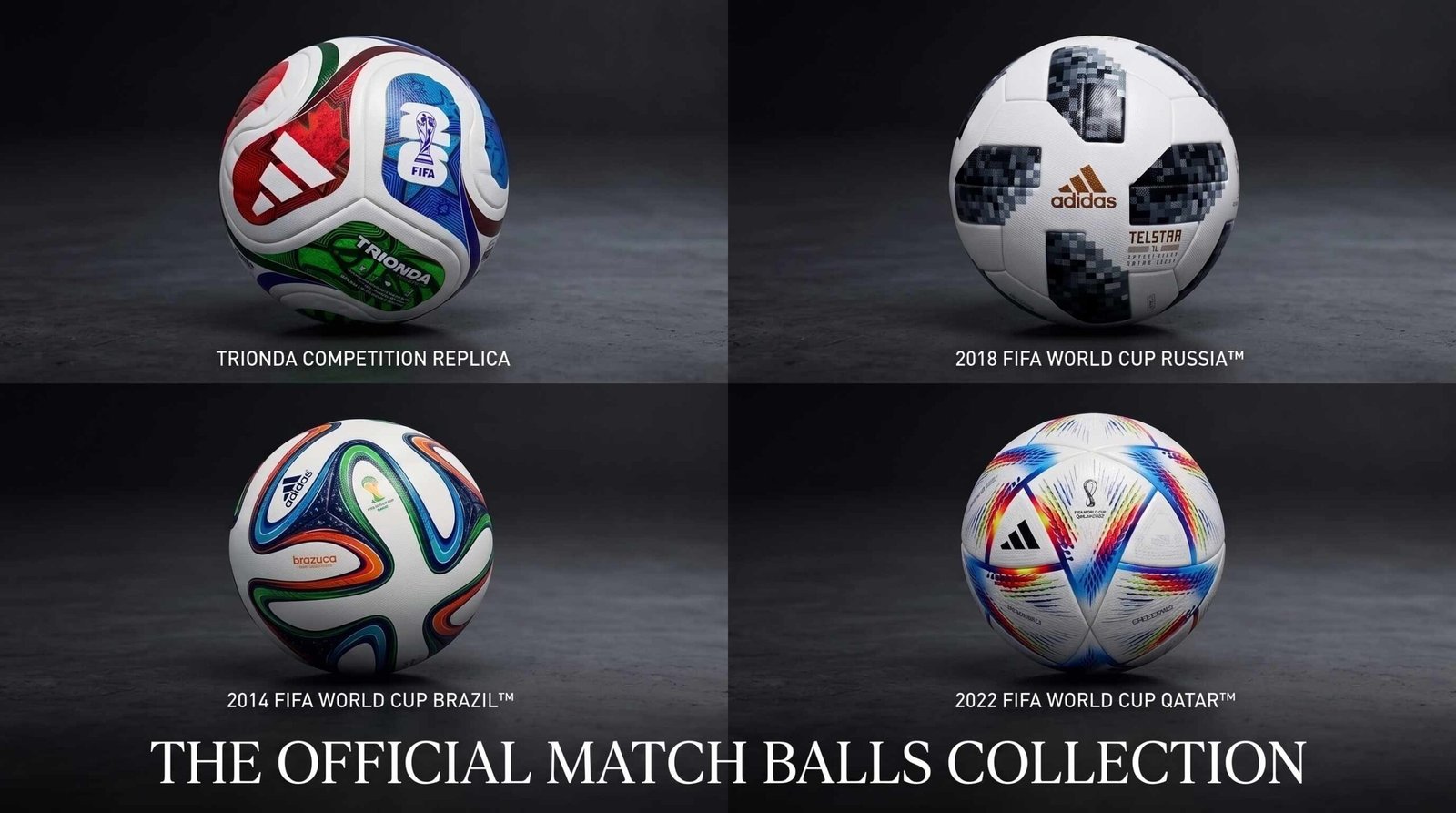
This streak matters. Adidas doesn’t bet its global brand reputation on factories that cut corners. The fact that a Sialkot-based company has been entrusted with the most visible piece of sports equipment on Earth, four times in a row, tells you everything about the quality standards the city operates under.
Hand-Stitching vs. Thermo-Bonding: The Technology Evolution
Traditional Sialkot footballs were entirely hand-stitched. A skilled stitcher could take hours to complete a single ball, ensuring tight, uniform seams that affected flight stability and water resistance. This craftsmanship is why Sialkot captured the premium market.
But the industry evolved. In 2013, Adidas transferred the thermo-bonding technology to Sialkot Pakistan, a process where panels are joined by heat rather than thread. This eliminated seam protrusions, improved aerodynamic consistency, and allowed for more complex panel geometries.
What this means practically:
- Hand-stitched balls remain the gold standard for training balls, match balls at lower tiers, and markets that value traditional craftsmanship. They offer a “true” feel that many players prefer.
- Thermo-bonded balls are now the standard for elite tournament play. They offer predictable flight patterns, better water resistance, and seamless surfaces that reduce unpredictable movement.
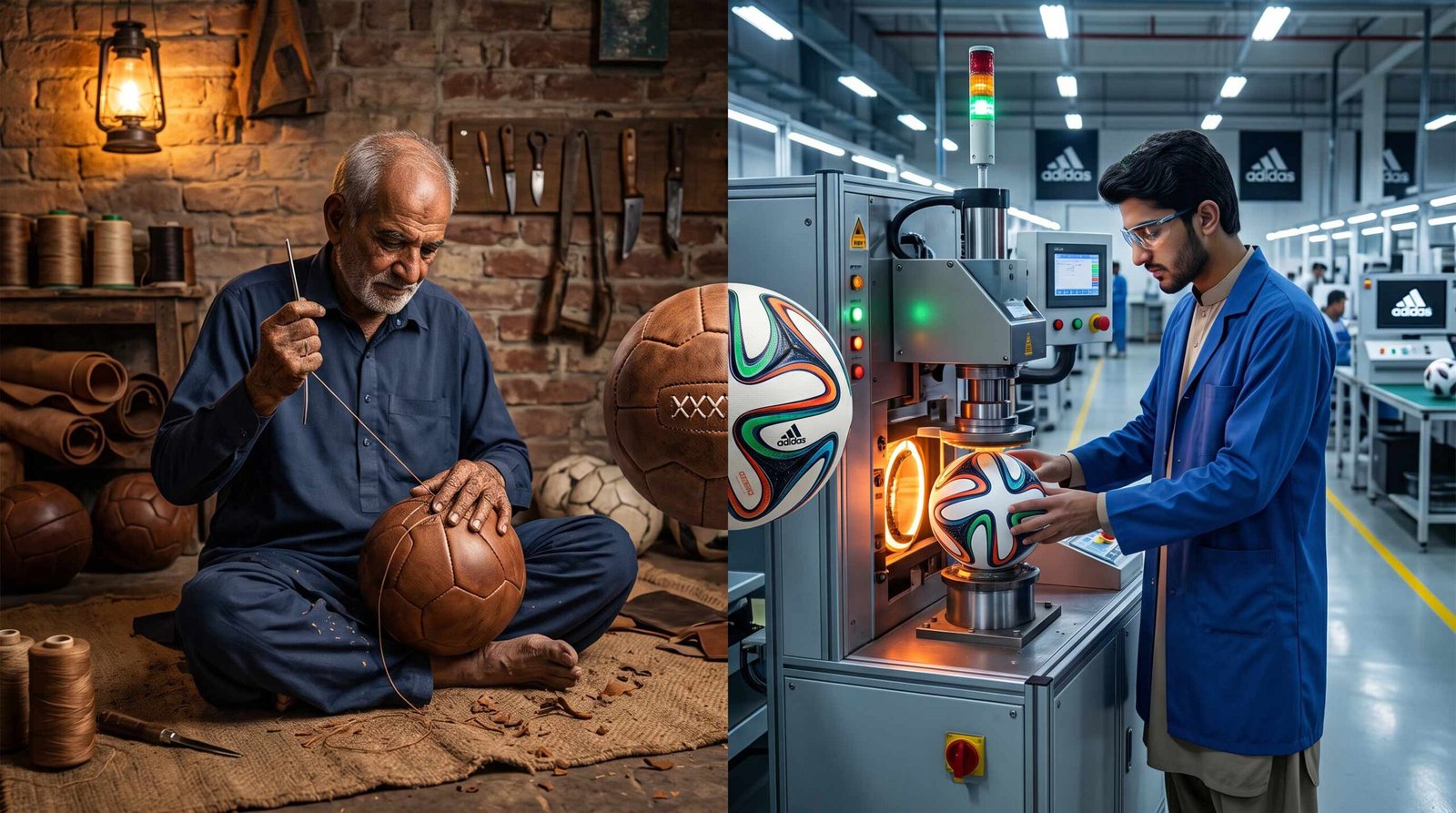
Sialkot’s manufacturers didn’t resist this change. They adapted. That adaptability, preserving traditional skills while investing in cutting-edge technology, is why the city stayed dominant even as China and Vietnam entered the market with cheaper, machine-stitched alternatives.
What Actually Goes Into Making a World-Class Football?
If you’ve never held a premium football next to a budget alternative, the difference is immediate. Here’s what separates a Sialkot-produced ball from a mass-market knockoff:
1. The Carcass
The inner bladder and lining determine how a ball retains air and shape. Premium balls use multiple layers of cotton or polyester fabric between the bladder and outer shell. Cheap balls use minimal lining, which is why they go lopsided after a few hard kicks.
2. The Outer Material
Match-quality balls use PU (polyurethane) synthetic leather, which offers grip in wet conditions and maintains its texture over time. Training balls often use PVC, which is more durable but less responsive. Sialkot manufacturers source high-grade PU materials and test them for UV resistance, abrasion, and temperature stability.
3. The Panel Design
Modern balls like the Brazuca and Al Rihla use six thermo-bonded panels instead of the traditional 32. Fewer panels mean fewer seams, which means more predictable aerodynamics. But this design requires precision manufacturing, a tolerance for error that Sialkot’s factories have proven they can meet.
4. Quality Testing
At Sialkot, balls undergo over 80 tests before mass production approval. These include:
- Heat and humidity exposure
- UV light degradation testing
- Print durability checks
- Impact testing (balls fired at metal-studded plates at 60+ km/h)
- Circumference and weight consistency checks
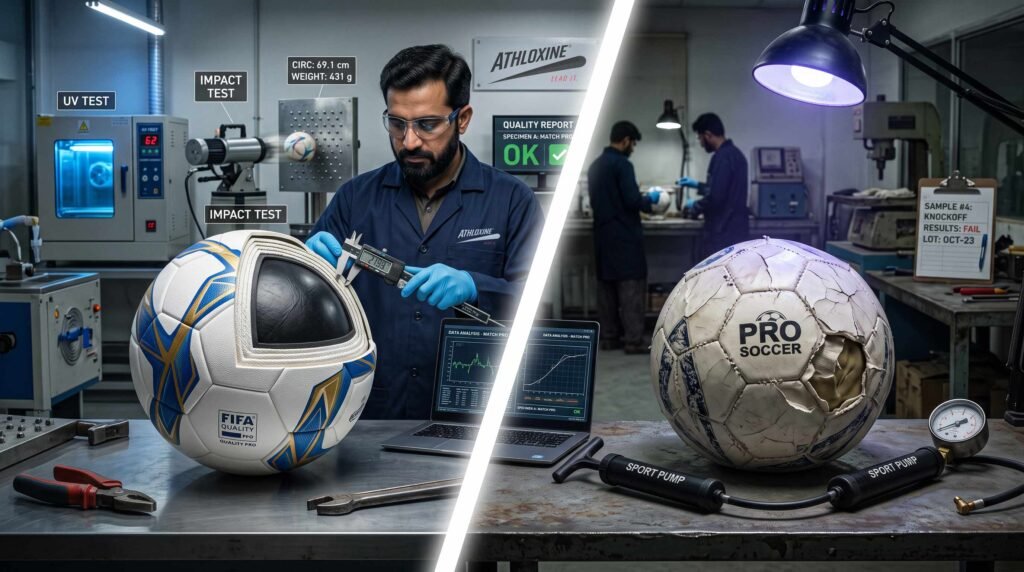
This isn’t marketing fluff. It’s the difference between a ball that performs identically in Dubai’s humidity and Moscow’s cold, and one that doesn’t.
The People Behind the Production
Behind every export figure is a workforce. Sialkot’s sports manufacturing sector employs roughly 60,000 people directly, with thousands more in supporting industries, leather processing, synthetic materials, printing, packaging, logistics, and export services.
Historically, much of the hand-stitching was done by women working from home or in small workshops. This provided vital household income but also raised concerns about child labor and working conditions. In the 1990s, international pressure led to monitoring arrangements and reforms. Today, major manufacturers operate under strict labor standards, with ID verification systems and minimum wage compliance.
The shift to thermo-bonding has also changed employment patterns. As machine-assisted production replaced some hand-stitching, retraining programs (supported by organizations like UN Women and the ILO) have helped transition workers into new roles.
The reality? Sialkot’s football industry isn’t perfect. Wages remain modest by Western standards, and informal workshops still operate outside major compliance frameworks. But the leading manufacturers have made measurable progress, and the industry’s move toward certified, ethical production is ongoing.
Why Sialkot’s Ecosystem Matters for Your Sports Brand
At Athloxine, we don’t just sell sports apparel and equipment. We source from ecosystems that understand performance under pressure. Sialkot isn’t just a manufacturing location for us, it’s a quality benchmark.
Here’s what that means for you as a buyer, team manager, or brand owner:
You Get Access to Generational Expertise
When you order footballs, soccer jerseys, goalkeeper gloves, or training gear from a supply chain rooted in Sialkot, you’re not getting factory-line anonymity. You’re getting products shaped by people who have spent decades understanding how equipment performs in real match conditions.
The Export Infrastructure Is Battle-Tested
Sialkot’s manufacturers don’t just supply local markets. They ship to 100+ countries, meeting FIFA Quality and FIFA Quality Pro standards, navigating complex international logistics, and maintaining consistency across massive order volumes. That logistical maturity translates to reliable delivery for your orders.
Innovation Happens Here
From NFC-embedded match balls to biodegradable materials and smart sensor technology, Sialkot’s leading manufacturers are investing in R&D. This isn’t a city stuck in 1970s craftsmanship, it’s a city combining heritage with innovation.
Expert Tips: What to Look for When Sourcing Footballs and Sports Gear
If you’re evaluating suppliers or placing bulk orders, here are practical guidelines based on industry standards:
1. Check the Certification Look for FIFA Quality Pro, FIFA Quality, or Fair Trade certifications. These aren’t just logos, they indicate the ball has passed standardized testing for weight, circumference, rebound, water absorption, and shape retention.
2. Ask About the Bladder Latex bladders offer better touch and responsiveness but lose air faster. Butyl bladders hold air longer but feel slightly harder. Match balls typically use latex; training balls often use butyl. Know what your use case demands.
3. Inspect the Seams On hand-stitched balls, seams should be tight, uniform, and recessed. Loose or protruding stitches affect flight and durability. On thermo-bonded balls, the surface should be genuinely seamless, no visible glue lines or panel gaps.
4. Test the Grip A quality PU outer layer should feel slightly tacky, not slippery. In dry conditions, you should be able to control the ball without it sliding off your foot. In wet conditions, it should maintain predictable traction.
5. Avoid “Too Good to Be True” Pricing If a supplier offers FIFA-quality match balls at 30% below market rate, you’re not getting a deal, you’re getting a compromise on materials, labor standards, or both. Sialkot produces at competitive rates, but genuine quality has a floor.
Common Mistake to Avoid: Don’t assume all Sialkot-made products are equal. The city has over 180 football-producing firms, ranging from FIFA-certified factories to informal workshops. Always verify your supplier’s credentials, not just their location.
Frequently Asked Questions
How much of the world’s footballs does Sialkot produce?
Sialkot, Pakistan produces approximately 70% of the world’s hand-stitched footballs and exports over 40 million balls annually to more than 100 countries. The city is widely recognized as the global capital of football manufacturing.
Which FIFA World Cup balls were made in Sialkot?
Sialkot’s Forward Sports has manufactured official Adidas match balls for four consecutive FIFA World Cups: the Brazuca (2014), Telstar 18 (2018), Al Rihla (2022), and Trionda (2026).
Why did football manufacturing start in Sialkot?
The industry began in the late 19th century when local artisans started repairing leather footballs for British soldiers stationed in the region. This repair work evolved into replication and eventually a full-scale export industry by the 1970s.
What is the difference between hand-stitched and thermo-bonded footballs?
Hand-stitched balls use traditional threading for panel assembly and are preferred for training and certain match play due to their “true” feel. Thermo-bonded balls use heat-sealed panels, creating a seamless surface with more predictable aerodynamics, the standard for elite tournament play.
How big is the Sialkot football industry economically?
Football exports from Sialkot generate approximately $150–$221 million annually, depending on global demand cycles. The broader sports goods sector contributes $600–$700 million to the city’s exports and employs roughly 60,000 workers.
Is child labor still a problem in Sialkot’s football industry?
Major manufacturers have implemented strict age-verification systems and comply with international labor standards following reforms in the 1990s. However, informal workshops remain a challenge. Buying from certified, reputable suppliers is the best way to ensure ethical production.
What other sports equipment does Sialkot manufacture?
Beyond footballs, Sialkot produces cricket gear, hockey equipment, boxing gloves, MMA gear, sportswear, and surgical instruments. The city’s manufacturing expertise spans multiple sports disciplines.
Can small sports brands source from Sialkot manufacturers?
Yes. While major manufacturers like Forward Sports handle large contracts for global brands, many mid-sized factories in Sialkot accept smaller minimum order quantities (MOQs) and offer customization for emerging brands, clubs, and academies.
About the Author
Athloxine Editorial Team, We are sports equipment specialists and manufacturing consultants with over a decade of experience sourcing performance gear from South Asia’s leading production hubs. Our team has visited manufacturing facilities across Sialkot, evaluated supply chains for FIFA-certified production, and advised sports brands on quality control, ethical sourcing, and product development. We write from direct experience, not press releases.
Ready to Source Gear Built on World-Cup-Level Standards?
Whether you’re kitting out a local academy, launching your own sports brand, or simply tired of equipment that falls apart mid-season, Athloxine connects you to the same manufacturing ecosystem that produces footballs for the world’s biggest stage.