
You’ve seen it before. A team walks onto the pitch wearing jerseys that looked incredible in the mockup, vibrant colors, crisp logos, bold stripes. By halftime, the numbers are peeling, the fabric is clinging with sweat, and the captain’s armband has faded to a dull gray.
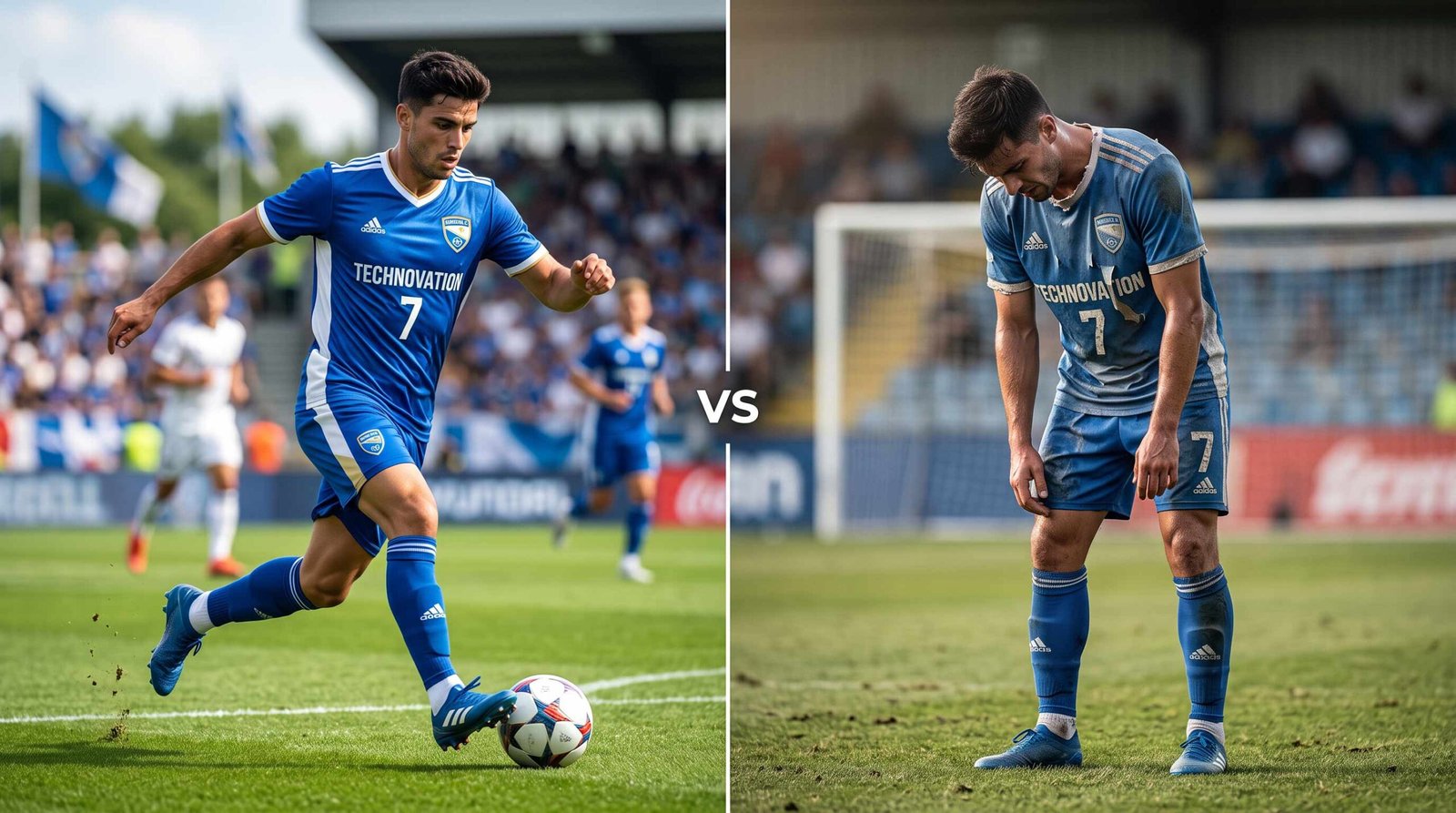
That gap between “looks good in the catalog” and “performs under pressure” is exactly why so many clubs, academies, and resellers in the USA are rethinking where and how their soccer jerseys are made.
This guide isn’t a generic overview. It’s built on years of manufacturing custom soccer kits at scale in Sialkot, Pakistan, one of the world’s oldest and most trusted sports production hubs, responsible for roughly 70% of the planet’s hand-stitched footballs and a major share of global team apparel.
Whether you’re ordering 20 jerseys for a youth academy or 2,000 for a national distributor, here’s what actually matters when designing and manufacturing a USA soccer jersey that holds up to real play.
What “USA Soccer Jersey” Actually Means in the Custom Market
The phrase gets used loosely. In the manufacturing world, it breaks down into three real categories:
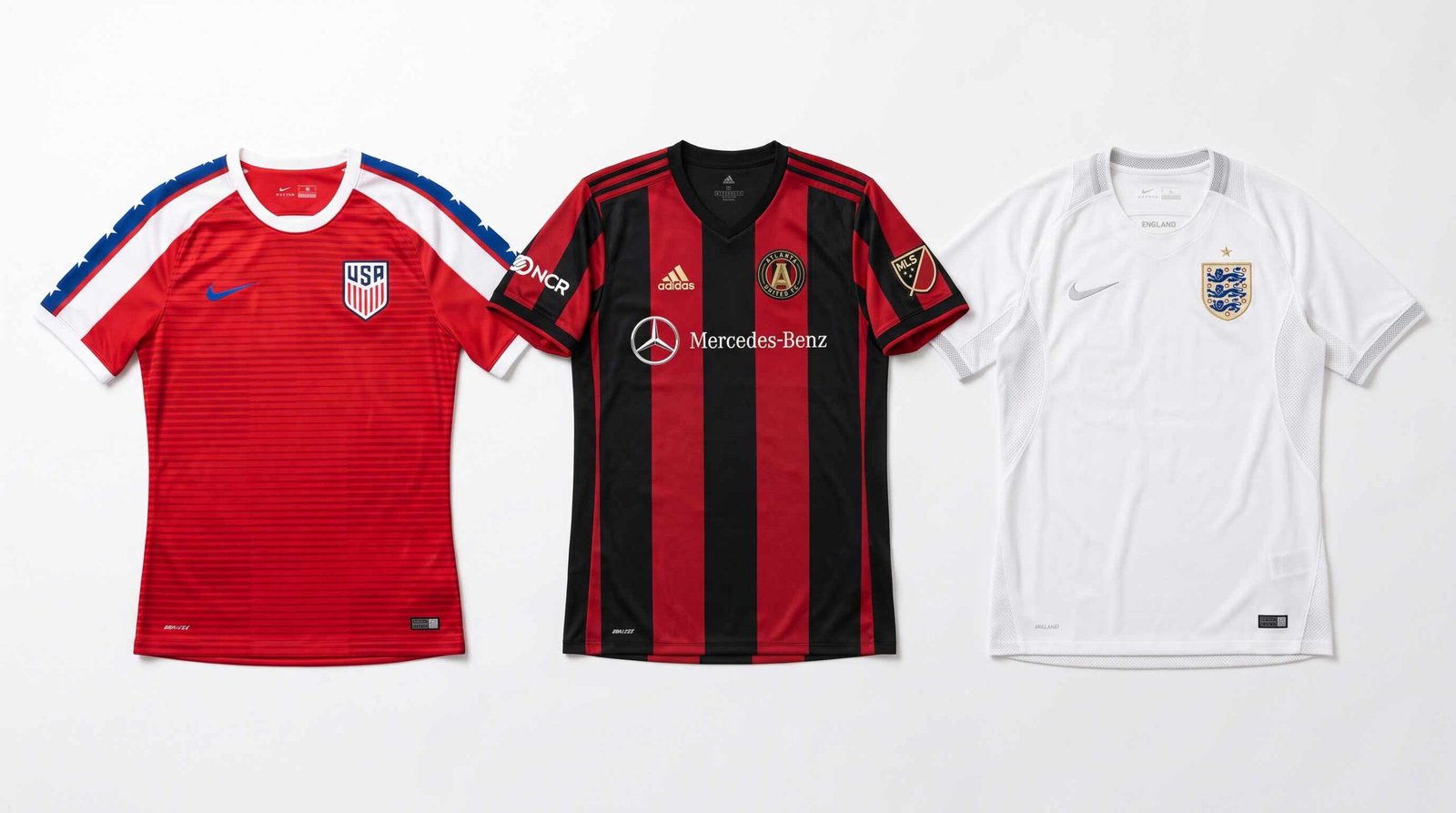
| Category | Description | Typical Buyer |
| Replica / Fan Jerseys | Styled after national team aesthetics; sold to supporters and casual wearers | Retailers, fan shops, event merchandise |
| Team / Club Custom Kits | Fully branded with club logos, player names, numbers, and sponsor placements | Youth academies, adult leagues, college clubs |
| Elite Performance Match Kits | Pro-grade fabrics, ergonomic paneling, heat-management systems | Semi-pro and professional clubs |
Most searches for “USA soccer jersey” come from buyers in the second and third categories, people who need custom manufacturing, not off-the-rack retail. That’s the intent this article serves: commercial and transactional, with a heavy informational layer so buyers know what to ask for and what to avoid.
Fabric Technology: The Foundation Everything Else Builds On
You can have the world’s best design, but if the base fabric is wrong, the jersey fails. After producing thousands of kits, here’s what we’ve learned separates fabrics that last from fabrics that don’t.
The Three Fabric Grades We Work With
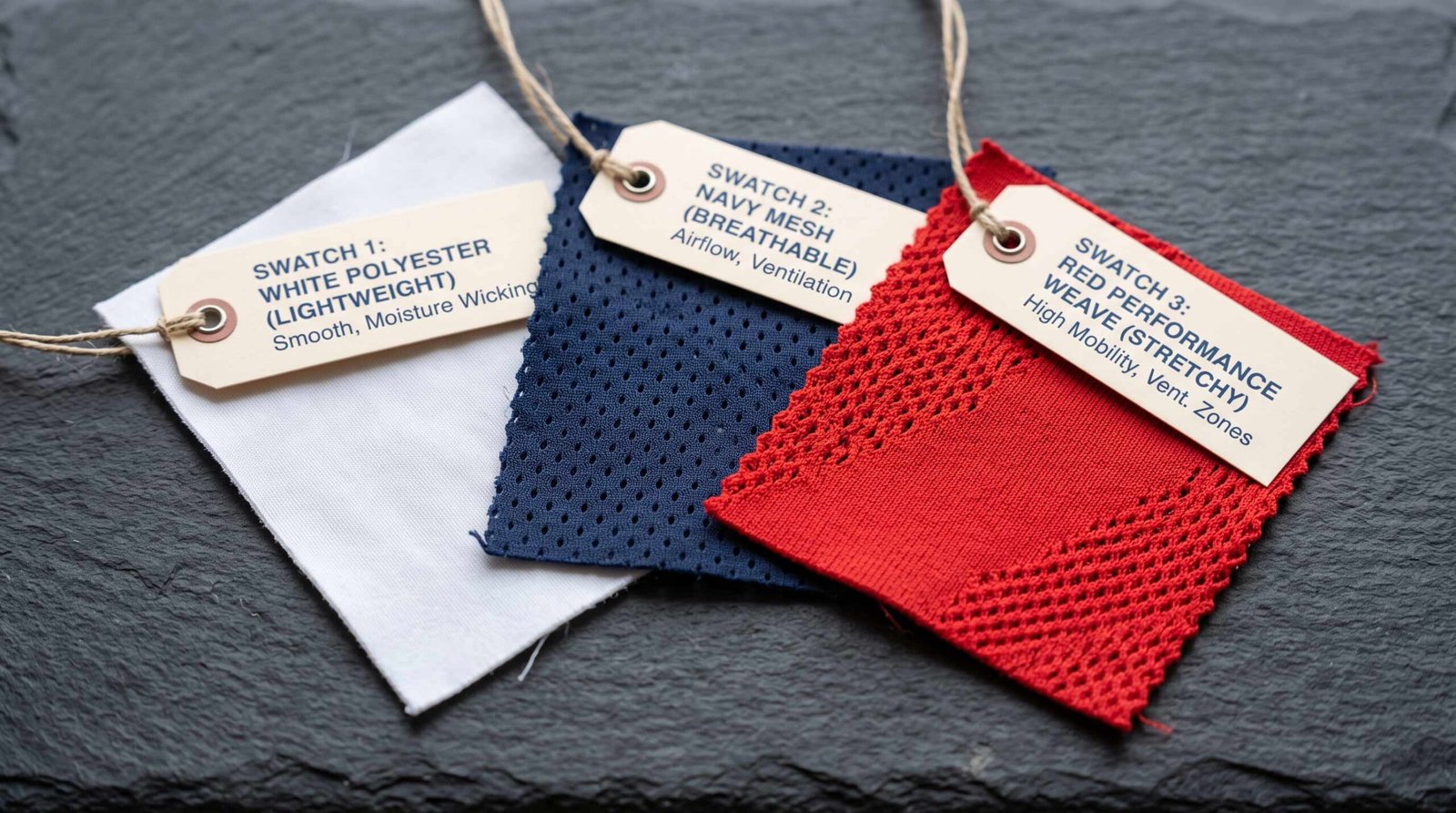
1. Standard Polyester Interlock (Entry-Level)
- 130–150 GSM
- Good for training bibs, promotional giveaways, and budget leagues
- Breathable but not optimized for high-intensity play
- Best paired with screen-printed or heat-pressed numbers
2. Performance Micro-Mesh (Mid-Tier)
- 160–180 GSM
- Closed-hole or open-hole mesh construction
- Moisture-wicking with quick-dry properties
- Ideal for youth academies, school leagues, and recreational clubs
- Sublimation-friendly; colors stay vibrant after 50+ washes
3. Pro-Grade Aero-Weave (Elite Tier)
- 180–220 GSM
- Multi-panel construction with targeted ventilation zones
- 4-way stretch for unrestricted movement
- Anti-microbial and UV-resistant treatments
- What semi-pro and professional clubs in the US increasingly request
Expert Tip: Don’t chase the lowest GSM thinking lighter is better. A 130 GSM fabric on a pro-grade cut will feel flimsy and tear at the seams under contact. Match the fabric weight to the level of play, not the price point.
Why Moisture-Wicking Actually Matters
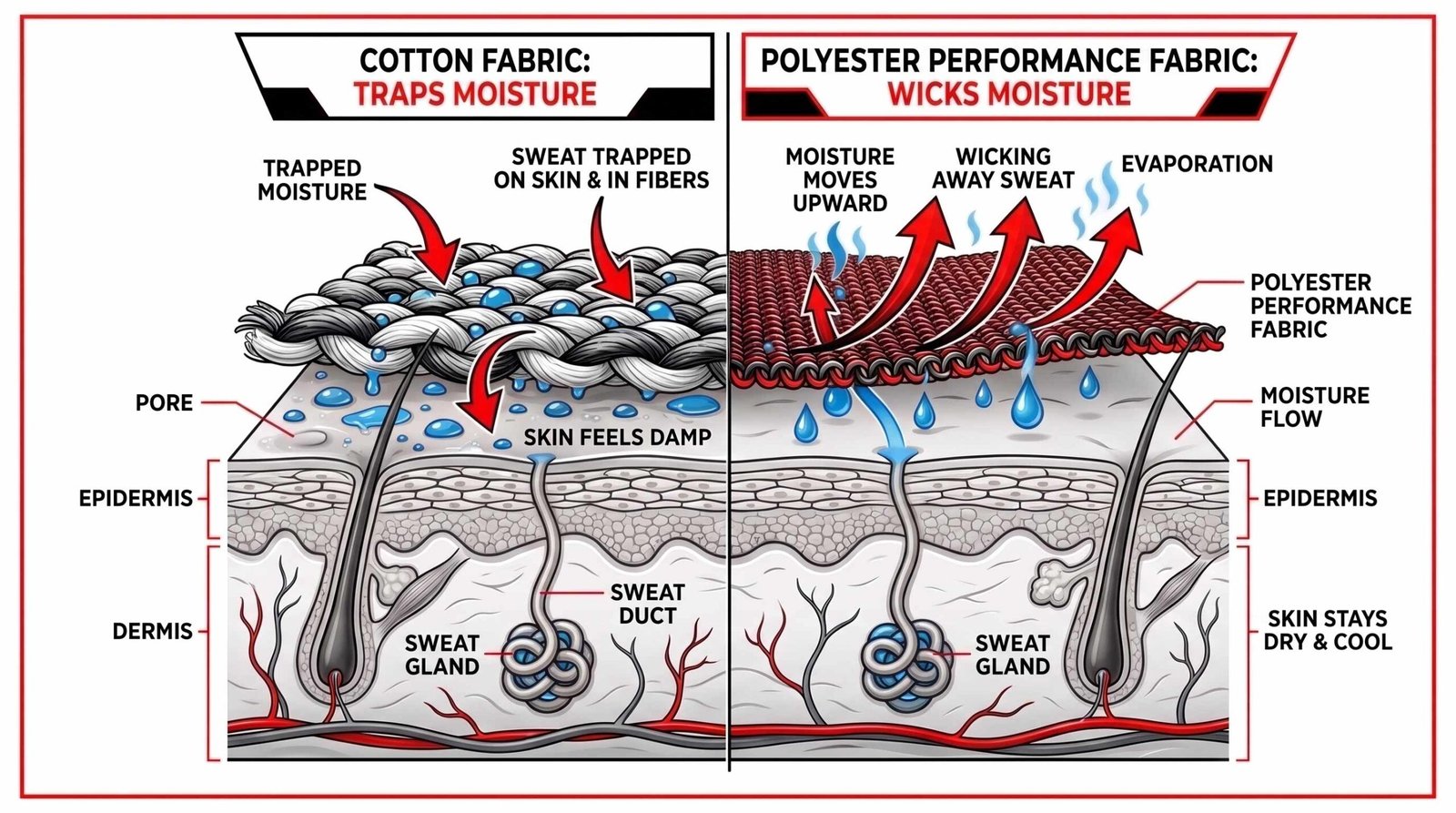
Cotton absorbs up to 7% of its weight in moisture and holds it against the skin. Polyester performance fabrics wick sweat to the outer layer, where it evaporates. In a 90-minute match, that difference isn’t about comfort, it’s about body temperature regulation and cramp prevention. When we manufacture USA-bound kits, we spec moisture-wicking as standard on anything above entry-level. It’s non-negotiable for clubs that play in humid summer conditions or indoor facilities with poor airflow.
Sublimation vs. Screen Print: The Decision That Determines Longevity
This is the question we get most often from US buyers. Here’s the breakdown from a production floor perspective.
Sublimation Printing (Our Recommendation for Custom Kits)
Sublimation uses heat to transfer dye directly into the fabric fibers. The ink becomes part of the material rather than sitting on top of it.
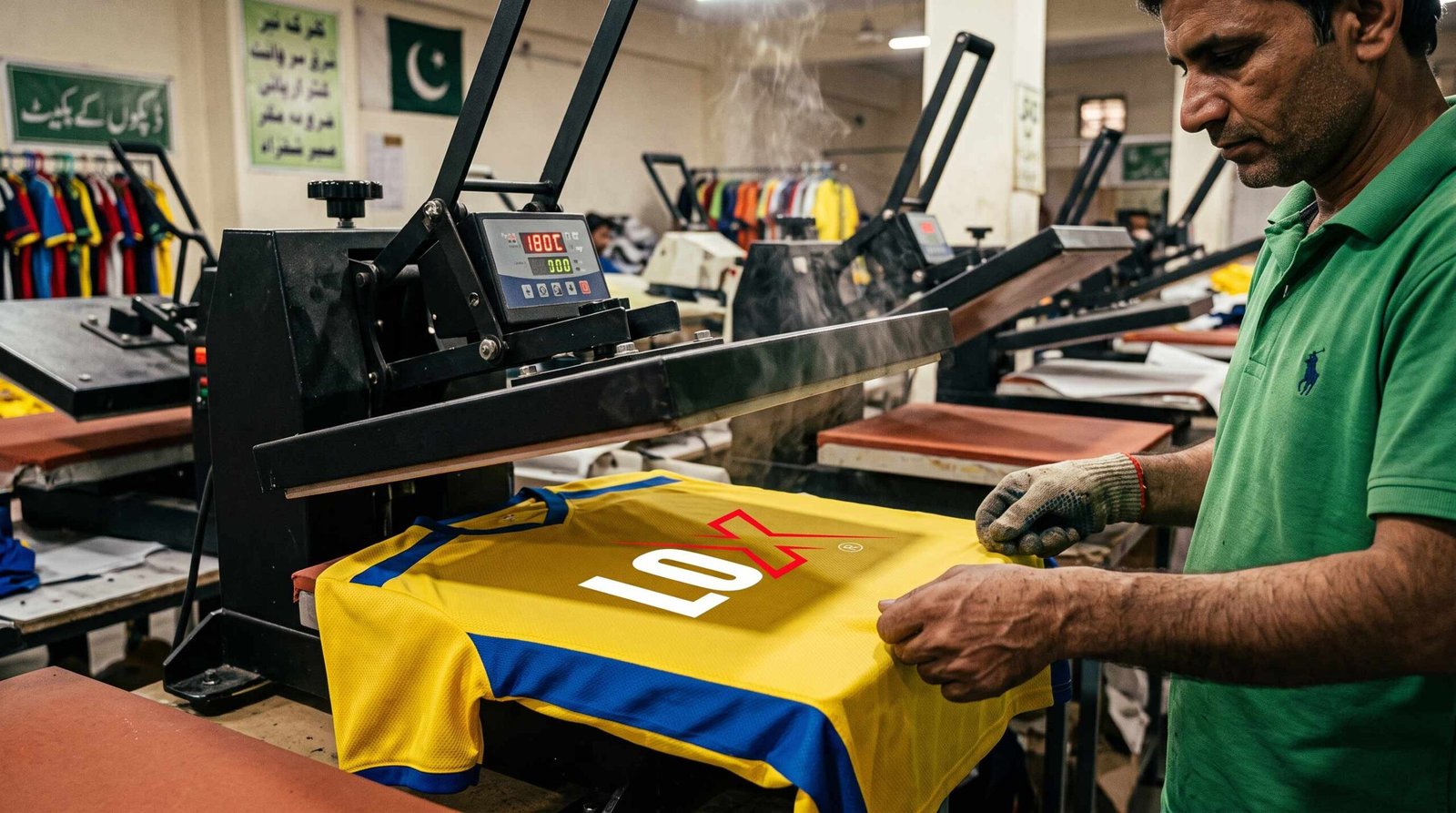
Why it wins for custom USA soccer jerseys:
- Permanent color infusion: No cracking, peeling, or fading, even after years of washing and abrasive play
- Unlimited design freedom: Gradients, all-over prints, photographic elements, intricate patterns
- Breathability preserved: No vinyl patches or heavy ink layers blocking airflow
- Lightweight feel: The jersey weighs the same before and after printing
When to use it: Any order where design complexity, durability, and player comfort matter. This covers 80% of the custom market.
Screen Printing (Still Has a Place)
Screen printing pushes ink through a mesh stencil onto the fabric surface. It’s cost-effective for simple designs with limited colors.
When it makes sense:
- Large-volume orders with one or two colors
- Training bibs where longevity is less critical
- Tight budgets where sublimation setup costs are prohibitive
The catch: Screen-printed numbers and logos will eventually crack and peel. In our experience, screen-printed kits start showing wear around wash 25–30. Sublimated kits look identical at wash 100.
Heat Transfer / Vinyl (Avoid for Match Kits)
Vinyl transfers are popular for quick-turnaround personalization, but they’re heavy, trap heat, and peel under stress. We only recommend vinyl for namesets on pre-made replica jerseys, not for full custom manufacturing.
Design Elements That Make a USA Soccer Jersey Stand Out
The USA market has specific aesthetic preferences that differ from European or South American markets. Here’s what US clubs and resellers consistently request.
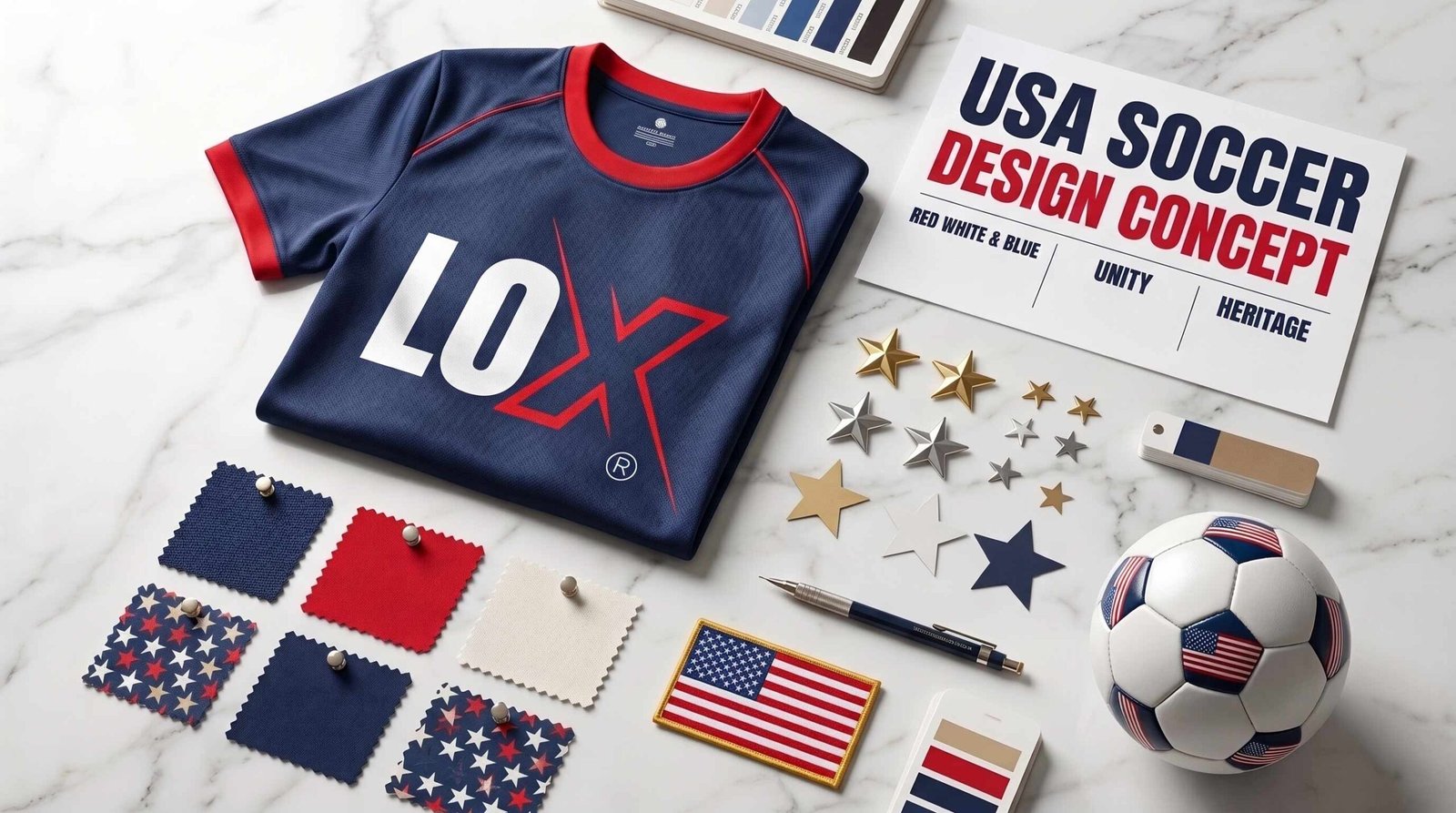
Color Psychology and National Identity
US soccer culture leans heavily on:
- Navy and red combinations (patriotic palette)
- Clean, minimalist designs with bold typography
- Subtle star or stripe motifs referencing the flag without being literal
- Matte finishes over high-gloss; the US market prefers understated professionalism
Typography and Numbering
- Block sans-serif fonts dominate; they’re readable from distance and feel athletic
- 3D drop-shadow or outline effects on numbers improve visibility for broadcast and photography
- Nameplate placement: Standard is 2 inches above the number on the back panel
Sponsor Integration
US youth soccer has strict rules on sponsor logo size (typically max 8 square inches for most leagues). When we design custom kits for US clubs, we build sponsor zones into the layout from the start, rather than squeezing logos in as an afterthought. This prevents rejected designs and reworks.
Collar and Sleeve Details
- V-neck and crew neck are equally popular; henley collars are trending for lifestyle crossover jerseys
- Raglan sleeves allow for cleaner shoulder-to-chest design transitions
- Set-in sleeves with contrast underarm panels are preferred by clubs wanting a more structured, “pro” silhouette
The Manufacturing Process: From Sketch to Shipped Kit
Here’s exactly how a custom USA soccer jersey moves through production at our facility in Sialkot.
Stage 1: Design Consultation & Tech Pack (Days 1–3)
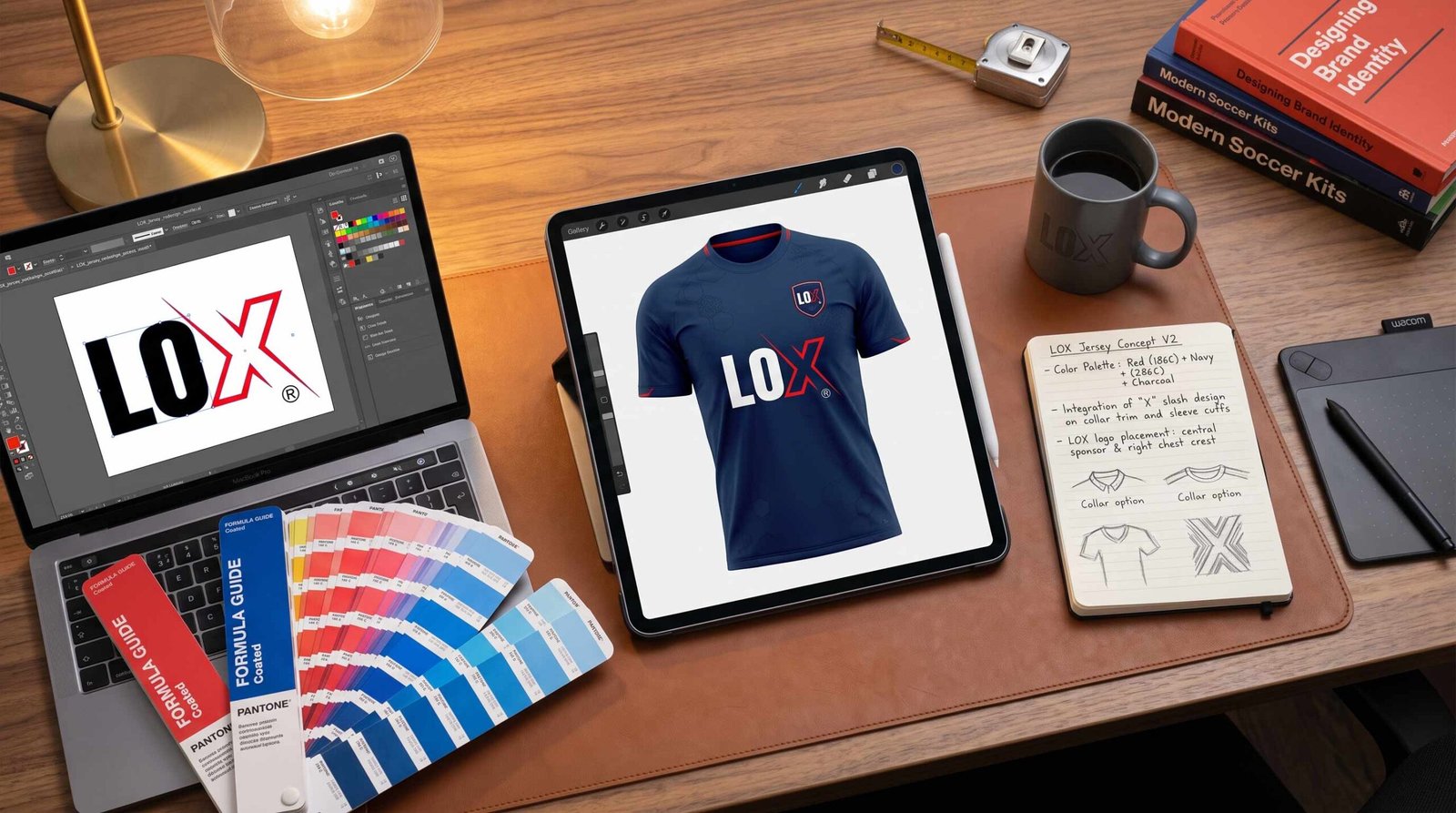
We start with the club’s vision, not a template. Our design team reviews:
- Club crests and logos (vector files preferred; we convert raster images at no cost)
- Color codes (Pantone, CMYK, or hex references)
- League compliance requirements (sponsor size, numbering rules, badge placements)
- Player roster with sizing distribution
Common mistake to avoid: Sending a low-resolution JPEG of your logo pulled from Facebook. It pixelates when scaled. Always provide vector files (AI, EPS, SVG) or high-res PNGs with transparent backgrounds.
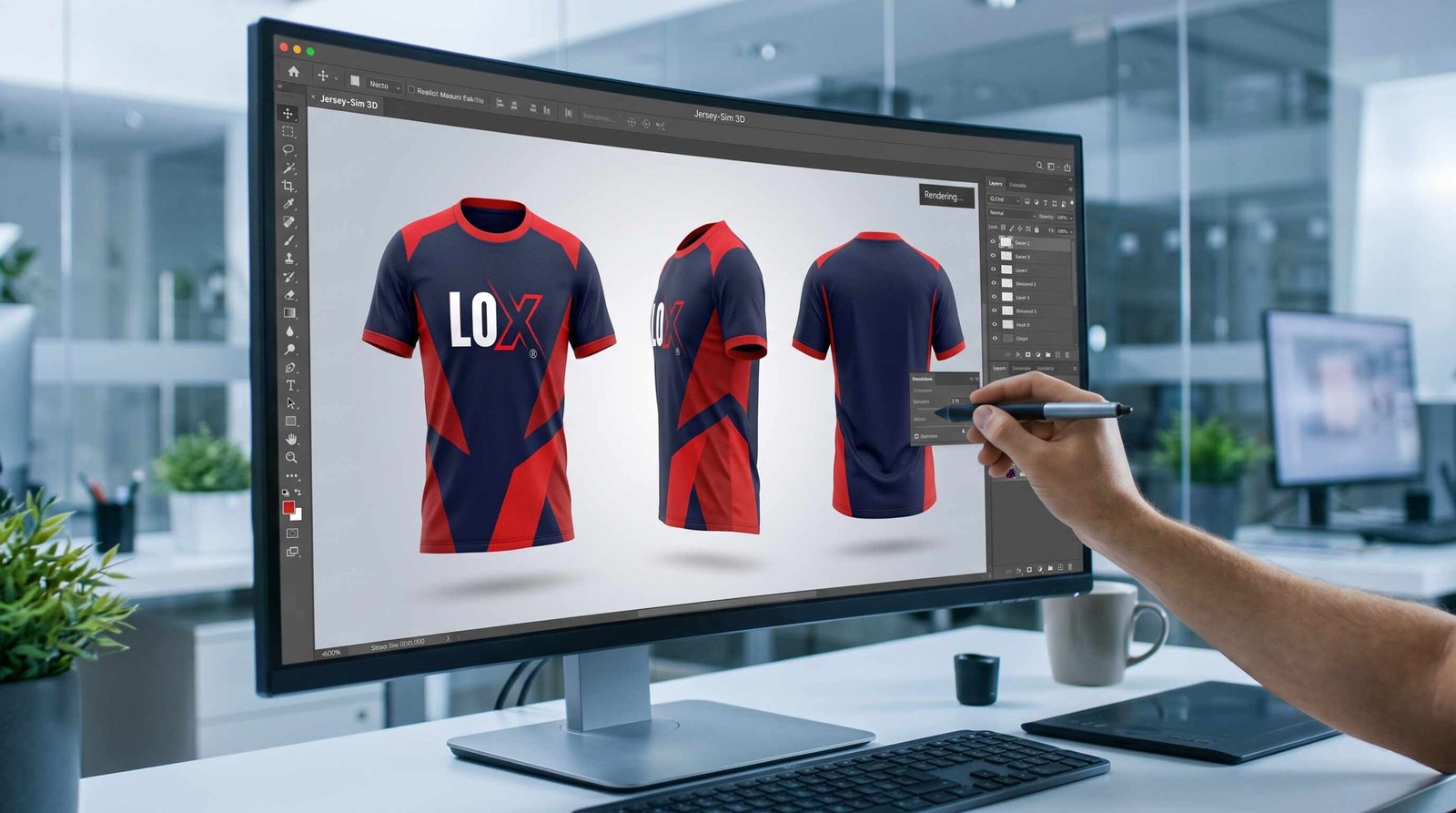
Stage 2: Digital Mockup & Approval (Days 4–5)
We produce a photorealistic 3D render showing front, back, and side views. This is the moment to catch errors, wrong shade of blue, logo placement too low, number font not matching your brand. Approvals at this stage save weeks of rework later.
Stage 3: Fabric Sourcing & Pattern Cutting (Days 6–8)
Based on the approved spec, we source the exact fabric grade and cut panels using computerized pattern-making machines. This ensures every size from Youth Small to Adult 3XL maintains proportional scaling, not just a blown-up version that bags at the shoulders.
Stage 4: Sublimation Printing & Heat Setting (Days 9–12)
Designs are printed onto transfer paper, then heat-pressed into the fabric at 200°C (392°F). The dye sublimates from solid to gas, bonding permanently with the polyester fibers.
Colors are checked against Pantone references under calibrated lighting.
Stage 5: Cutting, Sewing & Assembly (Days 13–16)
Panels are cut with CNC precision, then sewn by experienced operators. We use:
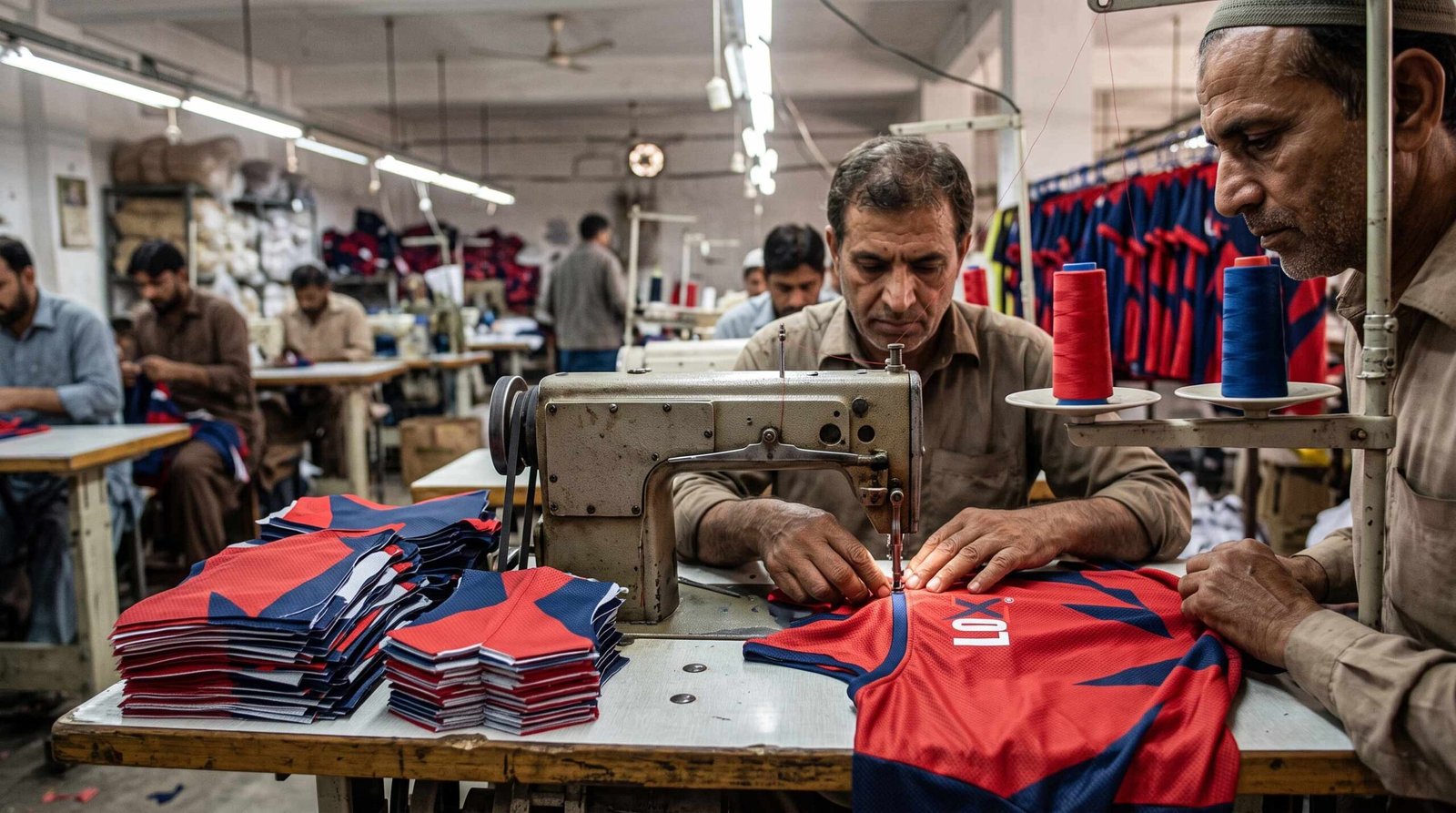
- Flatlock seams on side panels for stretch and comfort
- Cover-stitch hems on sleeves and bottom bands for clean finishes
- Reinforced shoulder seams to prevent tearing during physical play
Stage 6: Quality Control & Packaging (Days 17–18)
Every jersey is inspected for:
- Color accuracy against approved swatches
- Stitch integrity (pull tests on seams)
- Print alignment (logo centering, number straightness)
- Size verification against spec charts
Defective units are pulled and remade. Accepted units are individually poly-bagged and packed by size for easy distribution.
Stage 7: Shipping & Customs Clearance (Days 19–25 to USA)
We ship FOB Karachi via sea freight for bulk orders (most cost-effective for 100+ units) or air freight for urgent turnaround (7–10 days to major US ports). All shipments include commercial invoices, packing lists, and certificates of origin for smooth US customs clearance.
Total typical lead time: 18–25 days from approved mockup to delivery. Rush orders available in 10–14 days with air freight.
Sizing, Fit, and What US Clubs Get Wrong
US sizing runs differently than European or Asian standards. Here’s what we account for when manufacturing for American players.
Fit Profiles
| Fit Type | Best For | Notes |
| Athletic / Slim Fit | Adult competitive teams | Contoured to the body; size up if players prefer layering |
| Regular Fit | Youth leagues, recreational clubs | Slightly relaxed through the torso; most forgiving |
| Relaxed / Boxy Fit | Fan jerseys, lifestyle wear | Oversized trend; popular with streetwear crossover lines |
Size Distribution for Bulk Orders
For a typical US youth academy order of 100 jerseys, we recommend this size split:
- Youth Small: 10%
- Youth Medium: 15%
- Youth Large: 20%
- Adult Small: 15%
- Adult Medium: 20%
- Adult Large: 15%
- Adult XL: 5%
Always order 5–10% extra in your most common sizes. Mid-season growth spurts and late registrations are inevitable.
Cost Breakdown: What You’re Actually Paying For
Transparency matters. Here’s a realistic cost structure for custom USA soccer jerseys manufactured in Sialkot and shipped to the US.
| Component | Entry-Level | Mid-Tier | Elite |
| Fabric | $3–4 | $5–7 | $8–12 |
| Sublimation Print | $2–3 | $3–5 | $5–8 |
| Cut & Sew Labor | $1.50–2 | $2–3 | $3–5 |
| Quality Control | $0.50 | $1 | $1.50 |
| Packaging | $0.50 | $0.75 | $1 |
| Shipping (per unit, sea) | $1–2 | $1–2 | $1–2 |
| Approx. Landed Cost | $8.50–13.50 | $12.75–20.75 | $18.50–29.50 |
What this means for resellers: A mid-tier jersey that lands at ~$15 can retail at $45–65 with proper branding. The margin supports marketing, storage, and customer service while remaining competitive against mass-market brands.
Red flag: Any manufacturer quoting under $6 per unit for a fully custom sublimated jersey is cutting corners on fabric weight, ink quality, or QC. We’ve seen those jerseys. They don’t last a season.
Why Sialkot, Pakistan Is the Right Manufacturing Hub for US Soccer Jerseys
Sialkot isn’t a random factory town. It’s a 150-year-old manufacturing ecosystem with deep specialization in sports goods. The first football was re-stitched here in 1918, and the industry has evolved into a global export powerhouse.
What Makes Sialkot Different from Generic Overseas Manufacturing
- Concentrated expertise: Sampling, production, and shipping are coordinated within one dense ecosystem. You don’t wait three weeks for fabric to arrive from a different province.
- OEM and private-label maturity: Sialkot manufacturers have been producing for major global brands for decades. The infrastructure for custom branding, compliance documentation, and quality control already exists.
- Competitive without being cheap: The value proposition isn’t “lowest price on Alibaba.” It’s “European-quality production at South Asian cost efficiency.” German, US, and UK buyers have trusted Sialkot for decades as a top importer of Pakistani sports goods.
- Agile for small batches: Unlike massive Chinese factories that demand 5,000-unit minimums, Sialkot’s factory network handles 50-unit custom orders with the same attention to detail.
Common Mistakes When Ordering Custom Soccer Jerseys (And How to Avoid Them)
After working with hundreds of US-based clubs and resellers, these are the errors we see most often.
Mistake 1: Designing for the Screen, Not the Body
A flat 2D mockup doesn’t show how a design stretches across shoulders, bunches at the waist, or distorts over the chest. Always request a 3D render or, for large orders, a physical sample before full production.
Mistake 2: Ignoring League Compliance
Many US youth leagues (AYSO, US Club Soccer, state associations) have strict rules on logo size, color restrictions, and number height. Design without checking the rulebook, and you’ll be reordering mid-season.
Mistake 3: Choosing Price Over Partnership
The cheapest quote often comes from a trading company, not a manufacturer. Trading companies add a markup, outsource to whoever’s available, and disappear when quality issues arise. Work directly with the factory, or a factory-owned brand like Athloxine, so you have accountability.
Mistake 4: Underestimating Lead Time
Custom manufacturing takes time. “I need these in two weeks” is possible with air freight and rush fees, but it costs 40–60% more. Plan 6–8 weeks ahead for seasonal launches.
Mistake 5: Forgetting the Extras
A complete kit includes more than a jersey. Shorts, socks, warm-up jackets, and goalkeeper kits should share the same design language. Ordering jerseys from one supplier and shorts from another rarely matches perfectly.
Frequently Asked Questions
Q1: What’s the minimum order quantity (MOQ) for custom USA soccer jerseys?
Most manufacturers require 20–50 units per design. At Athloxine, we offer flexible MOQs starting at 20 jerseys with full customization, ideal for small clubs testing a new design.
Q2: How long does custom soccer jersey manufacturing take?
Standard lead time is 18–25 days from approved mockup to delivery in the USA. Rush production is available in 10–14 days with air freight.
Q3: Can I use my own club logo and sponsor branding?
Yes. We accept vector files (AI, EPS, SVG) and high-resolution images. Our design team can also recreate or refine logos if needed. Sponsor logos are integrated into the sublimation design at no extra cost per placement.
Q4: What’s the difference between sublimation and heat-pressed vinyl?
Sublimation dyes the fabric permanently, no peeling, cracking, or fading. Vinyl sits on top of the fabric and will degrade over time. For match kits, sublimation is the only professional choice.
Q5: Do you offer matching shorts, socks, and goalkeeper kits?
Yes. We manufacture complete soccer kits including shorts, socks, shin guards, captain armbands, and goalkeeper gloves with unified design language across all pieces.
Q6: How do I know what fabric to choose for my team?
For recreational and youth leagues, performance micro-mesh (160–180 GSM) offers the best balance of durability and cost. For competitive adult and semi-pro teams, pro-grade aero-weave (180–220 GSM) is worth the upgrade.
Q7: Can I order samples before committing to a bulk order?
Absolutely. We recommend ordering a single sample jersey to verify fit, fabric feel, and print quality before approving full production. Sample costs are credited toward your bulk order.
Q8: Do you ship directly to the US, and what about customs?
Yes. We ship worldwide with full documentation for US customs clearance. Sea freight is standard for bulk; air freight is available for urgent orders.
About the Author
This guide was produced by the product team at Athloxine, a brand that specializes in custom soccer kits, American football uniforms, and performance sportswear for clubs and resellers worldwide. With direct factory oversight and in-house design capabilities, Athloxine produces everything from youth academy kits to professional-grade match jerseys, without the markup of middlemen.
Ready to Design Your Custom USA Soccer Jersey?
Whether you’re a club director outfitting next season’s roster or a reseller building your own brand, the quality of your jerseys defines how your team is perceived.
Share your logo, colors, and vision. We’ll return a photorealistic 3D render within 48 hours, no commitment required.
Tell us your quantities and timeline. We’ll build a landed cost estimate with transparent pricing.
Feel the fabric, test the fit, and see the print quality before committing to production.
Athloxine — Custom sports apparel, manufactured in Sialkot, delivered worldwide.