
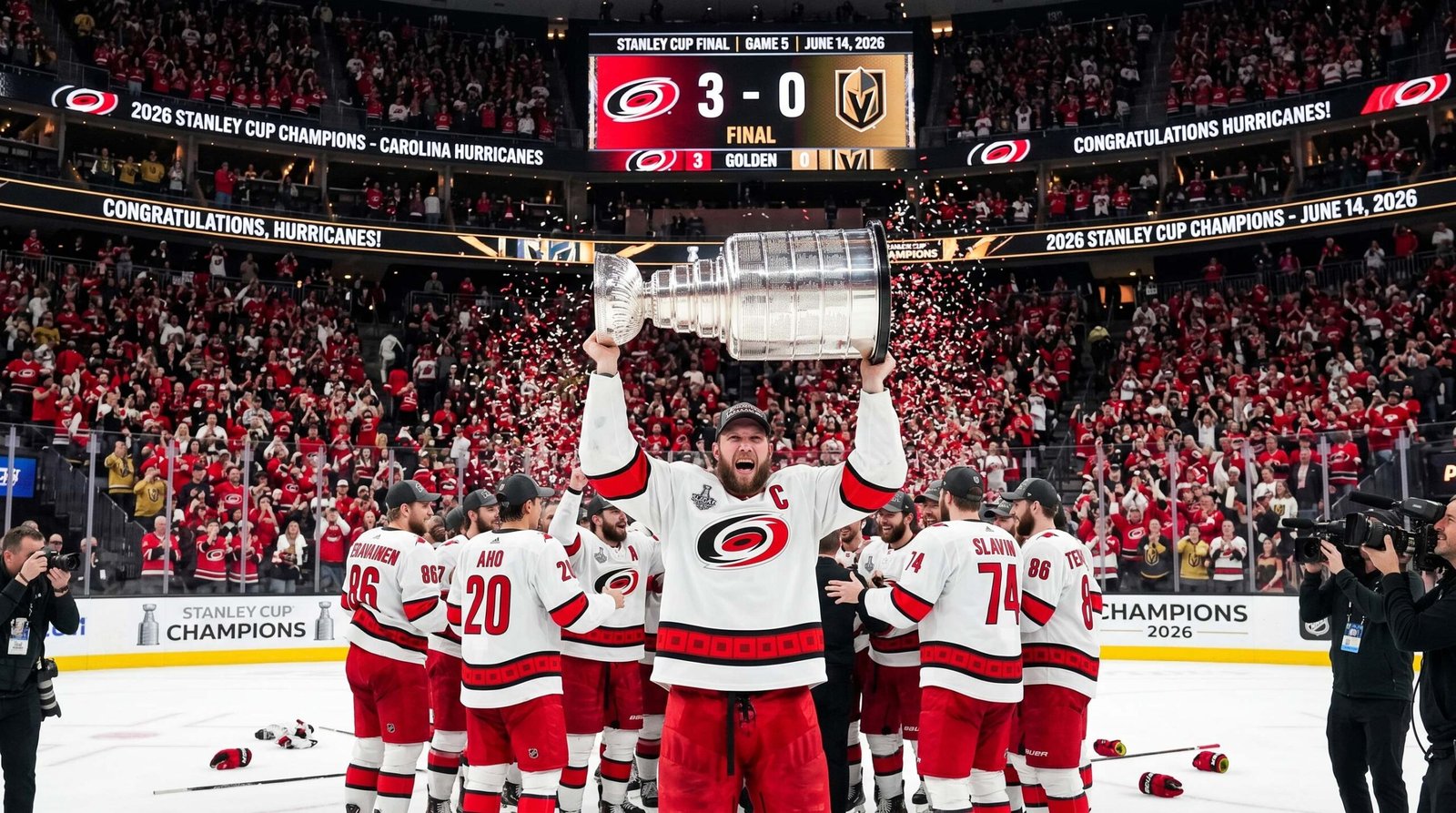
When the Carolina Hurricanes lifted the Stanley Cup 2026 on June 14, 2026, after defeating the Vegas Golden Knights in six games, millions watched the glory. But very few saw the hands that made it possible, the artisans, engineers, and factory floors thousands of miles from the ice, stitching the jerseys, molding the protective gear, and weaving the fabric that every player wore.
If you’re in the sports apparel business, whether you’re sourcing team uniforms, launching a hockey line, or simply trying to understand where elite gear actually comes from, this article answers the question nobody asks loudly enough: Who makes the gear that makes the moment?
We wrote this because we’ve spent years in the trenches of global sports manufacturing. At Athloxine, we’ve sourced, tested, and delivered certified sports apparel across six continents. What follows isn’t recycled Wikipedia content. It’s what we’ve learned from factory floors in Sialkot, quality audits in Faisalabad, and negotiations with brands that supply the NHL, IIHF, and national federations worldwide.
The 2026 Stanley Cup: What Just Happened (And Why It Matters for Manufacturers)
The 2026 Stanley Cup Final ran from June 4 to June 14, with the Carolina Hurricanes capturing their first championship since 2006 by defeating the Vegas Golden Knights 4-2. The series featured overtime thrillers, shutouts, and the kind of physical intensity that only hockey delivers.
But here’s what most fans missed: every jersey, every pair of gloves, every piece of protective equipment worn on that ice was part of a global supply chain that stretches from North American design studios to South Asian manufacturing floors.
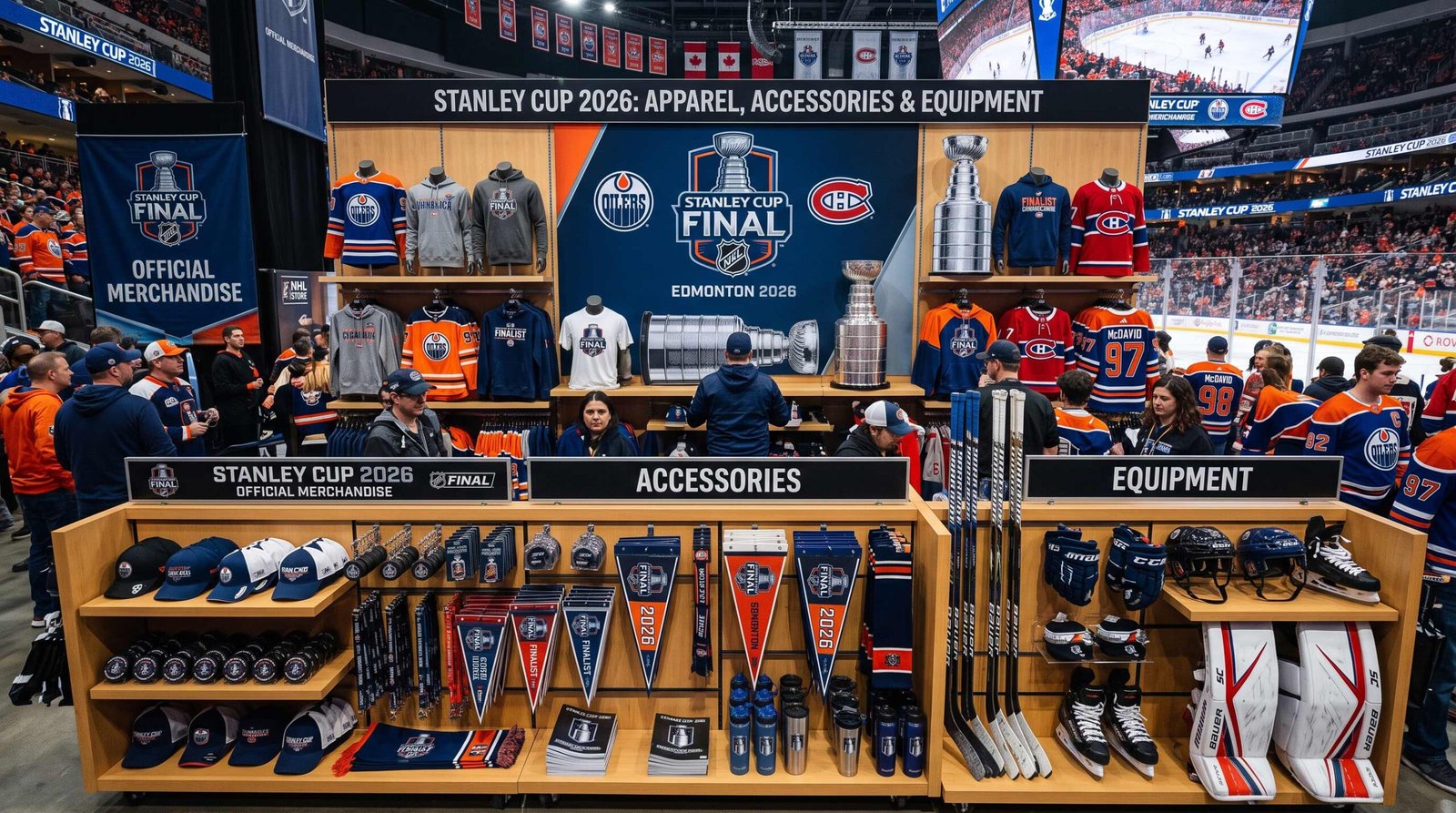
The global ice hockey equipment market was valued at approximately $3.56 billion in 2025 and is projected to reach $3.73 billion in 2026, growing at a CAGR of 4.24% through 2034. Europe and North America together account for nearly 90% of consumption, but the manufacturing story is far more distributed.
Expert insight: The NHL doesn’t manufacture its own gear. Neither do most elite leagues. They design, specify, and brand, but the actual production happens through a network of certified manufacturers, many of which trace their roots to the same industrial heritage we’ll explore next.
Sialkot, Pakistan: The 140-Year Engine of Global Sports Manufacturing
From British Army Repairs to FIFA World Cup Balls
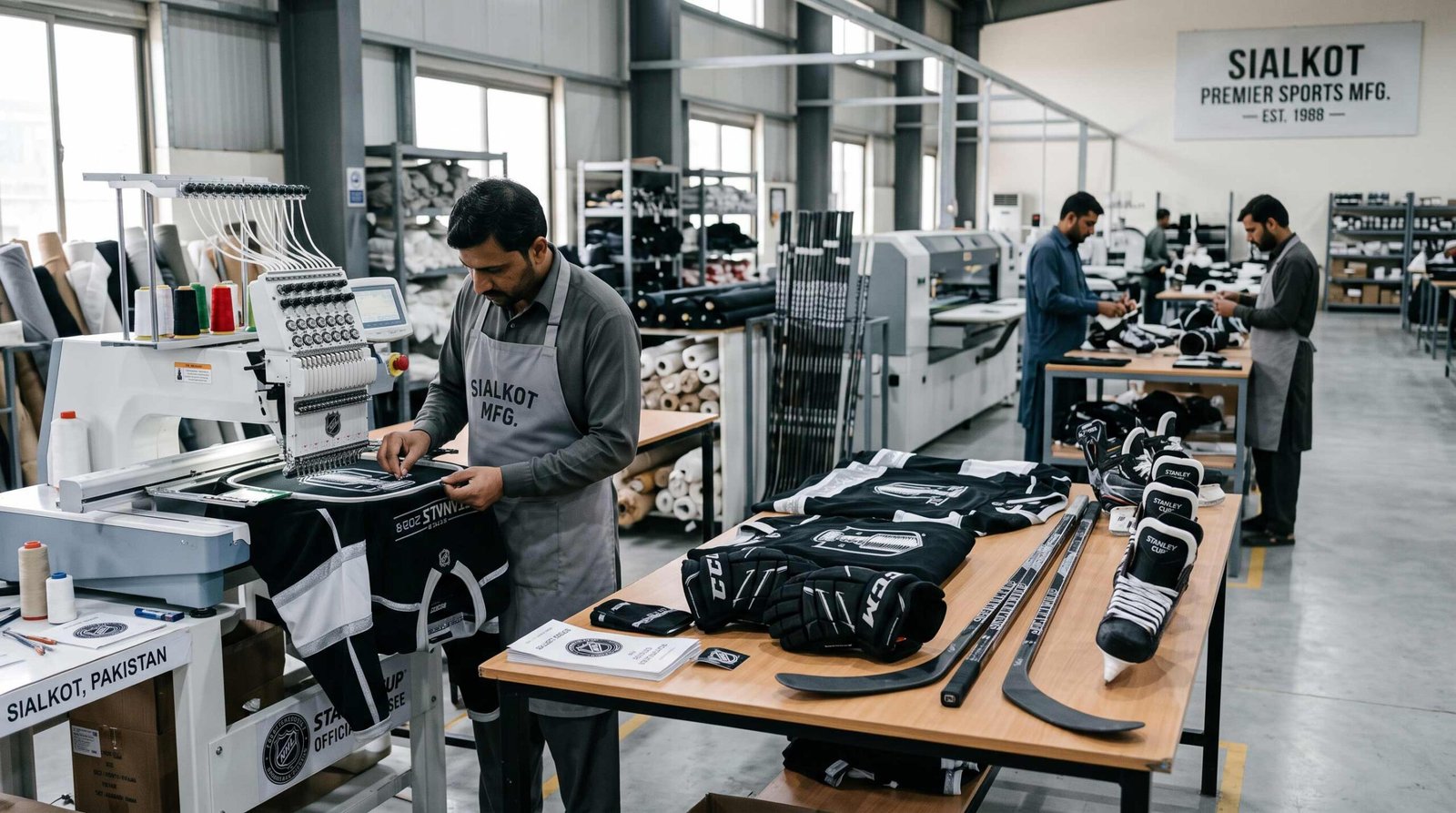
The story begins in 1883, when Sardar Bahadur Singh and Sardar Ganda Singh Oberoi established the first sports goods factory in Sialkot, producing wooden items like cricket bats, hockey sticks, and polo sticks for British Army soldiers stationed in the northern sub-continent. By 1918, local artisans had begun re-stitching damaged footballs for British troops, and eventually manufacturing them outright.
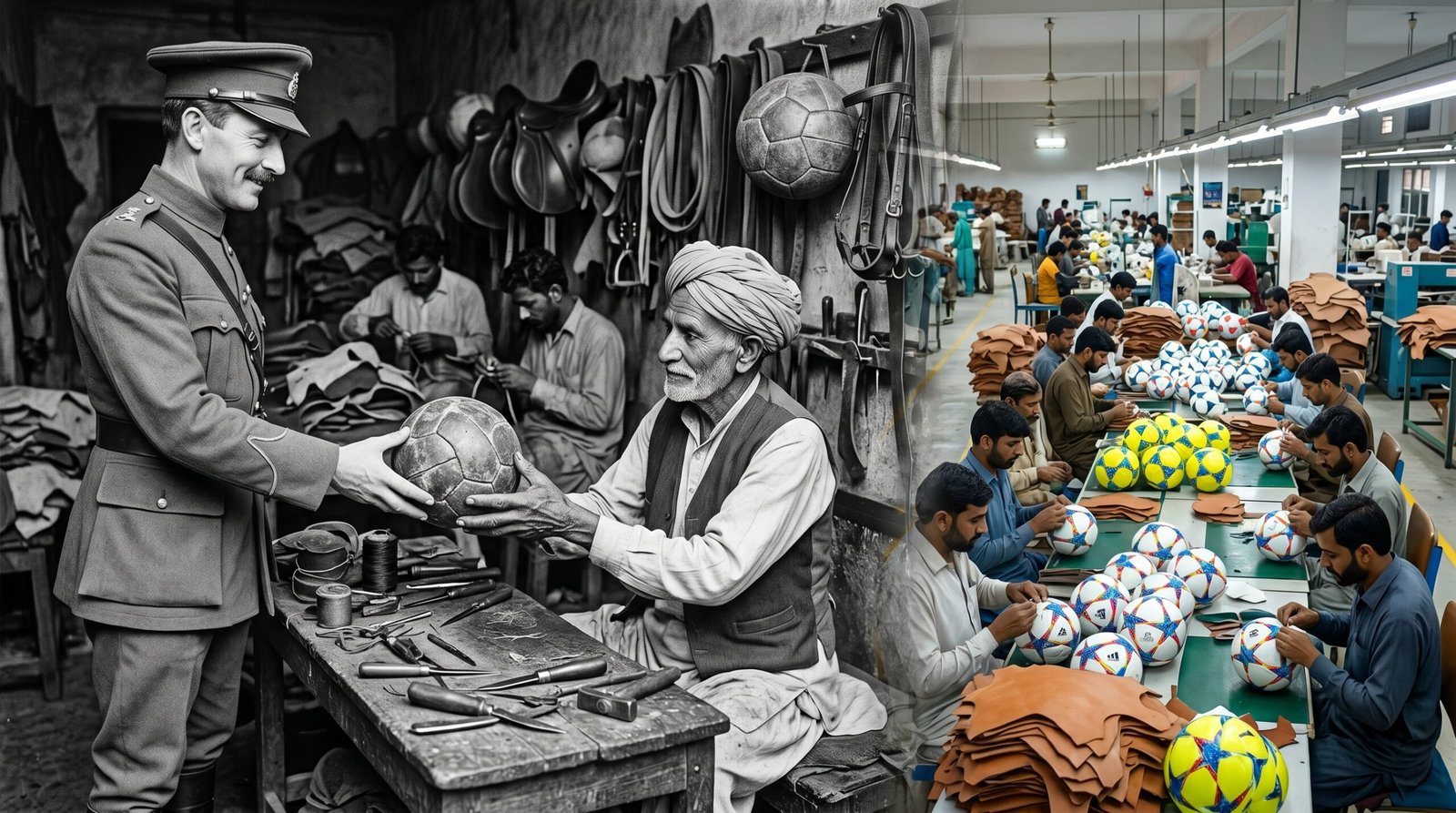
What started as repair work evolved into an industrial ecosystem. Today, Sialkot:
- Employs over 400,000 people directly or indirectly in export activities
- Generates approximately $900 million in annual export earnings
- Supplies roughly 60-70% of the world’s hand-stitched inflatable balls
- Serves as a primary sourcing hub for Adidas, Nike, Puma, and dozens of other global brands
In 2014, when Adidas needed emergency production of the Brazuca match ball for the FIFA World Cup, they turned to Sialkot after their primary supplier couldn’t meet demand. Sialkot produced approximately 42 million Brazuca balls, a testament to the city’s surge capacity and quality standards.
Why Sialkot Matters for Hockey Specifically
While Sialkot is world-famous for soccer balls, its relevance to hockey runs deeper than most realize:
- Wooden hockey stick heritage: The city’s original 1883 production included hockey sticks, leveraging the Himalayan foothills’ superior timber. Though composite materials have largely replaced wood, the craftsmanship DNA remains.
- Sportswear manufacturing: Modern Sialkot factories produce sportswear, gloves, and protective gear using mechanized and semi-automated processes. The SMEDA cluster profile confirms that sportswear manufacturing is now fully mechanized with computerized pattern-making replacing manual methods.
- Leather and synthetic expertise: Hockey gloves, pads, and protective equipment require advanced leatherwork and synthetic molding, capabilities Sialkot has refined over decades.
- Supply chain agility: With over 1,100 member firms in the Pakistan Sports Goods Manufacturers & Exporters Association (PSGMEA), Sialkot can scale production rapidly for major sporting events.
Expert tip: If you’re sourcing hockey apparel or equipment, don’t assume “Made in Pakistan” means low quality. The difference between a $20 replica jersey and a $200 authentic NHL jersey often isn’t the country of manufacture, it’s the specification, materials, and quality control protocols the brand imposes on the factory.
The Global Hockey Apparel Supply Chain: How It Actually Works
From Design Studio to Factory Floor
Here’s the reality of how a Stanley Cup jersey gets made:
Step 1: Design & Specification (North America/Europe) NHL teams and their apparel partners (Fanatics, Adidas, etc.) create designs, specify materials, and set performance standards. This includes moisture-wicking requirements, durability testing, and fit specifications.
Step 2: Sourcing & Vendor Selection (Global) Brands issue manufacturing contracts to certified vendors. For hockey jerseys, this often involves:
- Cut-and-sew operations in Pakistan, Bangladesh, or Vietnam for the main garment
- Sublimation/screen printing for numbers, names, and logos
- Trim and accessory production (zippers, labels, patches) from specialized suppliers
Step 3: Production & Quality Control (Manufacturing Hub) Factories produce samples, undergo approval rounds, then move to bulk production. Quality audits check for:
- Fabric weight and composition
- Stitch density and seam strength
- Colorfastness and wash durability
- Fit consistency across size ranges
Step 4: Distribution & Retail (Global) Finished goods ship to regional distribution centers, then to retailers, teams, and direct-to-consumer channels.
The Economics Nobody Talks About
Pakistan exported $16.7 billion in textiles and apparel in fiscal 2023, making it the world’s eighth-largest apparel supplier. For European buyers, Pakistan offers GSP+ duty-free access through at least 2027. For US buyers, the landed cost runs roughly 17% higher due to MFN duties (16.5% on cotton tees, 16.6% on denim), but raw FOB pricing remains highly competitive.
Sialkot’s specific advantage: Leather outerwear and sport accessories from Sialkot run 40-55% below European equivalents. The city produces finished leather goods, gloves, and technical apparel with locally sourced cowhide, sheep nappa, and goat suede.
What “LOX Certified” Actually Means (And Why Your Customers Care)
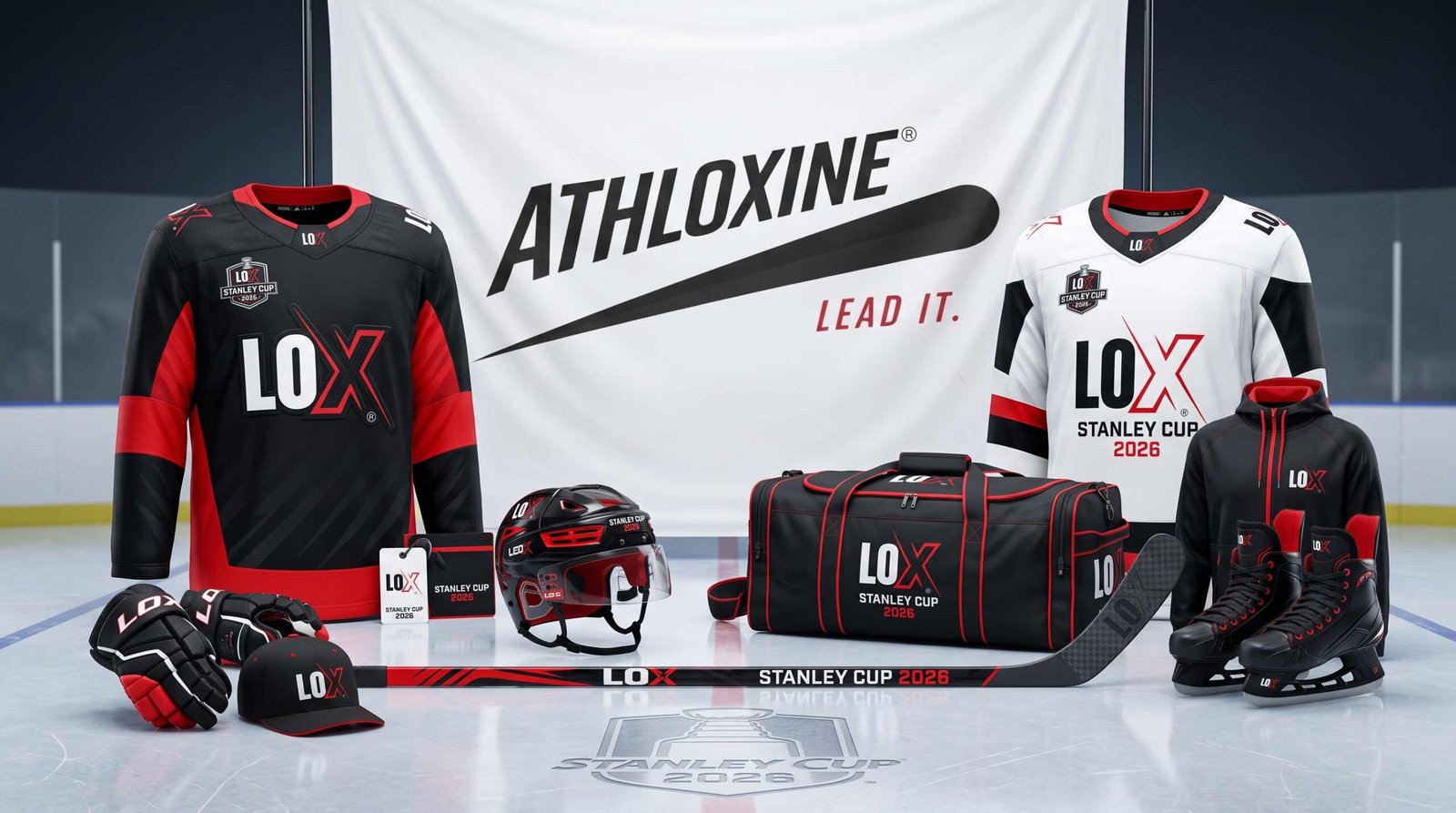
At Athloxine, we operate a LOX Certified product line covering American Football, Ice Hockey, Soccer, Cricket, Kilikiti, and Combat Sports. Here’s what that certification process involves, and why it matters for anyone buying sports apparel at scale:
The Certification Framework
LOX Certification isn’t a rubber stamp. It requires:
- Material testing: Fabric strength, abrasion resistance, and colorfastness to international standards
- Construction audits: Seam strength, stitch density, and structural integrity under load
- Performance validation: Moisture management, thermal regulation, and mobility testing
Why This Matters for Hockey Specifically
Hockey gear faces unique stresses:
- Abrasion: Ice contact, board contact, and equipment friction
- Moisture: Sweat management during 60+ minutes of high-intensity play
- Impact: Shoulder checks, puck impacts, and falls require reinforced construction
- Thermal regulation: Players need warmth without overheating
A LOX Certified hockey jersey isn’t just a shirt with a logo. It’s engineered to survive the specific abuse of the sport.
Mistake to avoid: Don’t source hockey apparel from generalist garment factories. Hockey requires specialized knowledge, from fabric selection (typically polyester blends with mechanical stretch) to construction details (flatlock seams to prevent chafing under pads). A factory that makes basketball jerseys well may completely miss the mark on hockey.
Custom Manufacturing: When Off-the-Shelf Won’t Cut It
Beyond our LOX Certified lines, Athloxine offers Custom Made production across Gym/Fitness, Yoga/Pilates, Ski/Winter Sports, Lifestyle/Streetwear, Puffer Jackets/Outerwear, and Running/Outdoor Sports.
The Custom Process for Hockey and Winter Sports
If you’re building a hockey brand, team, or retail line, here’s how custom manufacturing works in practice:
- Tech pack development: You provide designs, specifications, and material requirements. We refine them for manufacturability.
- Sampling: We produce pre-production samples for fit, fabric, and construction approval.
- Bulk production: Once approved, we scale to your MOQ (Minimum Order Quantity). For custom hockey jerseys, typical MOQs start at 100-200 units per design.
- Quality assurance: In-line inspections and final audits before shipment.
The biggest mistake brands make is rushing sampling to hit a deadline. A proper sample cycle takes 2-4 weeks, but it saves months of headaches later. We’ve seen brands skip sampling, approve based on photos, and then discover fit issues, color mismatches, or construction flaws in bulk production. The cost of fixing errors at the sample stage is roughly 1/50th the cost of fixing them after 1,000 units are sewn.
The Future: Where Hockey Manufacturing Is Heading in 2026 and Beyond
Technology Integration
The hockey equipment market is seeing rapid adoption of sensor-integrated gear, sticks that track shot speed, wearable devices that monitor fatigue, and smart fabrics that regulate temperature. The Asia-Pacific region is growing fastest (6.80% CAGR), driven by infrastructure investment in China, Japan, and emerging markets.
What this means for apparel manufacturers: The line between “clothing” and “equipment” is blurring. Forward-thinking manufacturers are investing in conductive thread integration, embedded sensor pockets, and app-connected performance tracking.
Sustainability Pressure
The IIHF Sustainability Award (recently awarded to Sweden) signals where the industry is heading. Brands are demanding:
- Recycled polyester content
- Waterless dyeing processes
- Carbon-neutral shipping options
- End-of-life recyclability
Manufacturers that can’t meet these standards will lose contracts to those that can.
Regional Shifts
With EU buyers diversifying away from Bangladesh due to political risk, and US brands seeking alternatives to China under Section 301 tariffs, Pakistan’s manufacturing base is gaining renewed attention. Forecasts suggest Pakistan’s apparel exports to the US could reach $4.50 billion by 2026.
Frequently Asked Questions
Q1: Where are NHL jerseys actually manufactured? NHL jerseys are manufactured through a global supply chain. The design and branding happen in North America, but production typically occurs in certified factories across Pakistan, Bangladesh, Vietnam, and China. Sialkot, Pakistan, is a significant hub for sportswear and leather goods production used in hockey gear.
Q2: What makes Sialkot special for sports manufacturing? Sialkot has been producing sports goods since 1883. The city employs over 400,000 people in export activities, generates ~$900 million annually, and supplies major brands like Adidas and Nike. Its expertise spans hand-stitched balls, leather goods, sportswear, and protective equipment.
Q3: What is LOX Certification in sports apparel? LOX Certification is a quality assurance framework that tests materials, construction, performance, and compliance against international standards. It ensures sports apparel can withstand the specific demands of its intended sport.
Q4: How much does the global ice hockey equipment market grow annually? The market was valued at $3.56 billion in 2025 and is projected to reach $3.73 billion in 2026, growing at a CAGR of 4.24% through 2034. Europe and North America dominate consumption, but Asia-Pacific is the fastest-growing region.
Q5: Can small brands or teams order custom hockey jerseys? Yes. Custom manufacturing typically requires MOQs of 100-200 units per design. The process involves tech pack development, sampling, bulk production, and quality assurance. Working with experienced manufacturers prevents costly errors.
Q6: What materials are best for hockey jerseys? Elite hockey jerseys use polyester blends (typically 100% polyester or poly-spandex blends) with moisture-wicking finishes. Key features include flatlock seams, reinforced stress points, and sublimation-friendly fabric for numbering and logos.
Q7: Is Pakistani manufacturing ethical for sports goods? The Sialkot sports goods industry underwent major reform following the 1997 Atlanta Agreement, which established child labor monitoring mechanisms. Today, the Independent Monitoring Association for Child Labor (IMAC) oversees compliance, and major brands conduct regular audits.
Q8: How long does custom hockey apparel production take? From tech pack approval to delivery, expect 6-10 weeks: 2-3 weeks for sampling, 3-4 weeks for bulk production, and 1-2 weeks for shipping. Rush orders are possible but carry premium pricing.
About the Author
Athloxine Editorial Team, With over a decade of combined experience in global sports apparel manufacturing, our team has conducted factory audits across Pakistan, Bangladesh, Vietnam, and China. We’ve sourced certified gear for teams, leagues, and retail brands in American football, ice hockey, soccer, cricket, combat sports, and beyond. We don’t write about manufacturing from a desk, we’ve stood on factory floors, negotiated with suppliers, and resolved quality crises at 2 AM. This article reflects what we’ve learned so you don’t have to learn it the hard way.
Ready to Source Hockey Apparel That Performs?
Whether you’re outfitting a team, launching a brand, or upgrading your retail line, the difference between good gear and great gear starts at the factory, not the storefront.